Let’s just be honest: Bucharest is a sprawling capital city choked with traffic, so it can be initially overwhelming to get your bearings as a visitor. Don’t fear though: the major historical landmarks (other than the Palace of the Parliament) are mainly concentrated in the vicinity north of the reconstructed Old Town, and the public transit system of metro and buses can be your friend in accessing certain museums or the notable parks on the outskirts.
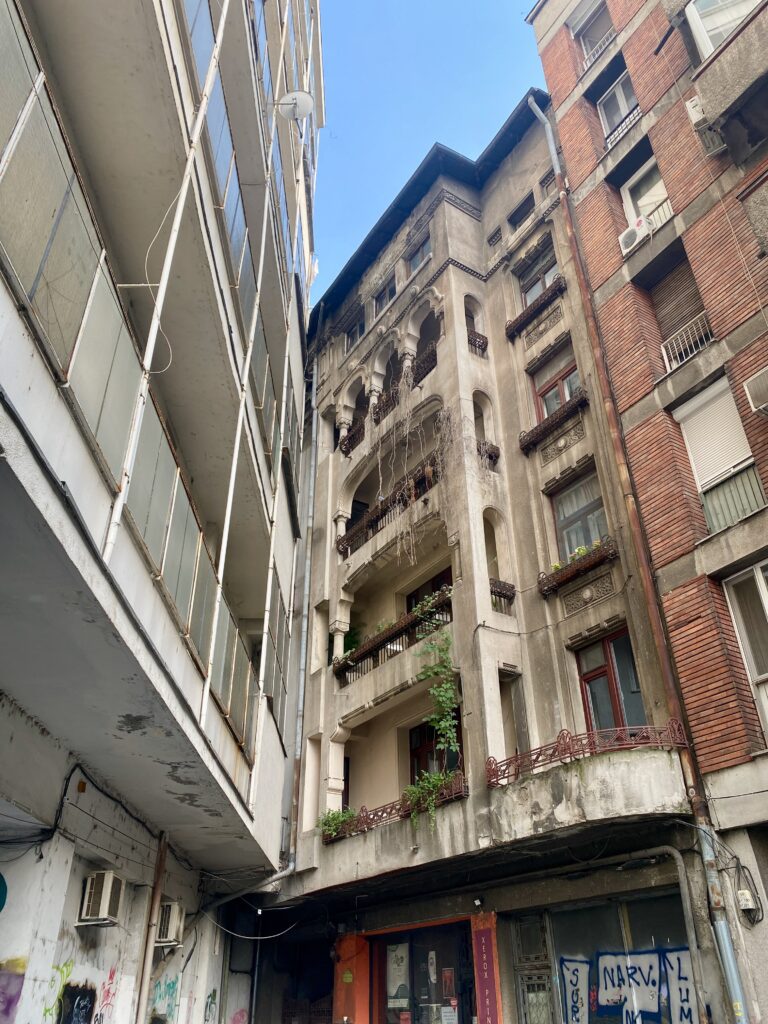
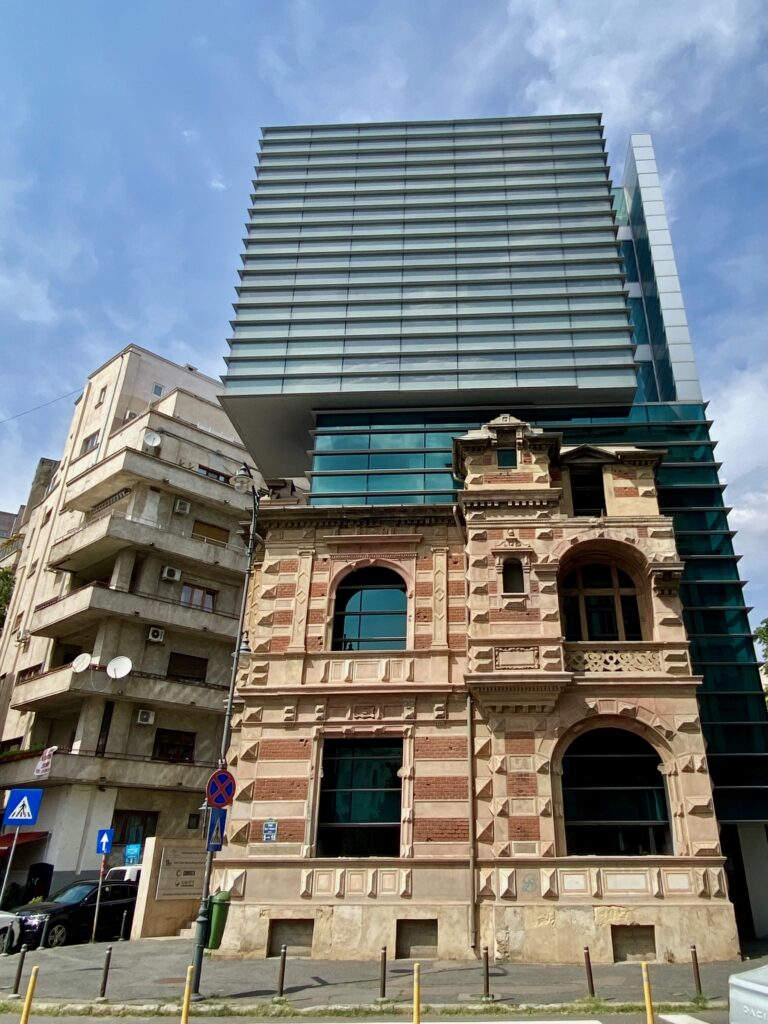
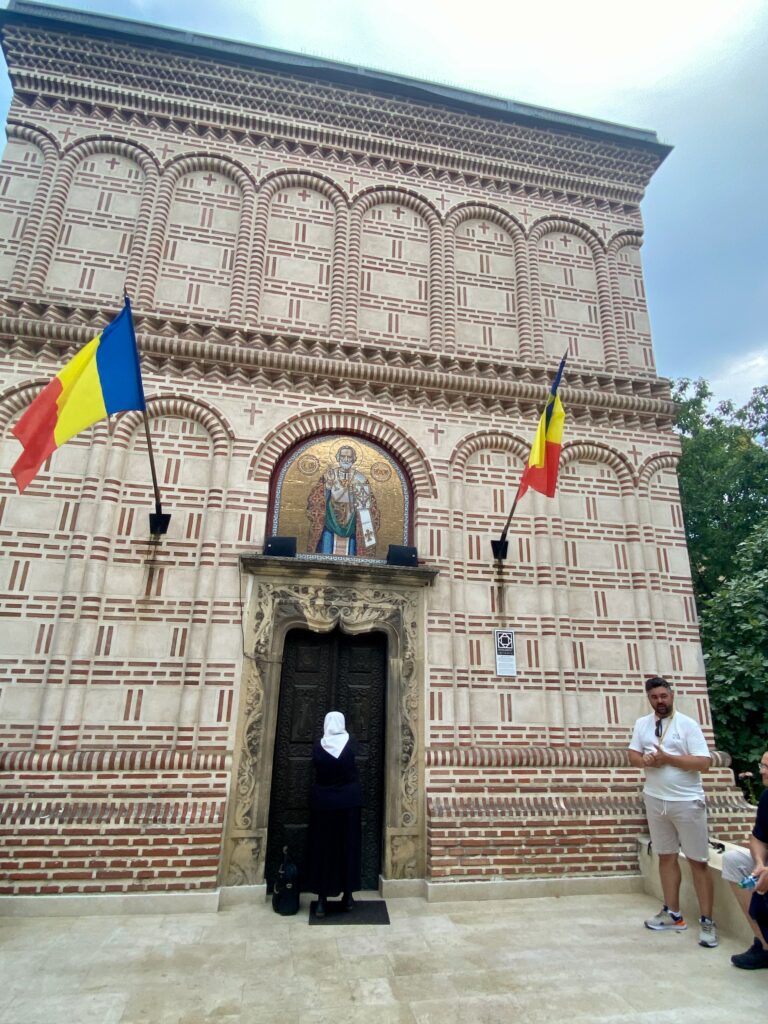
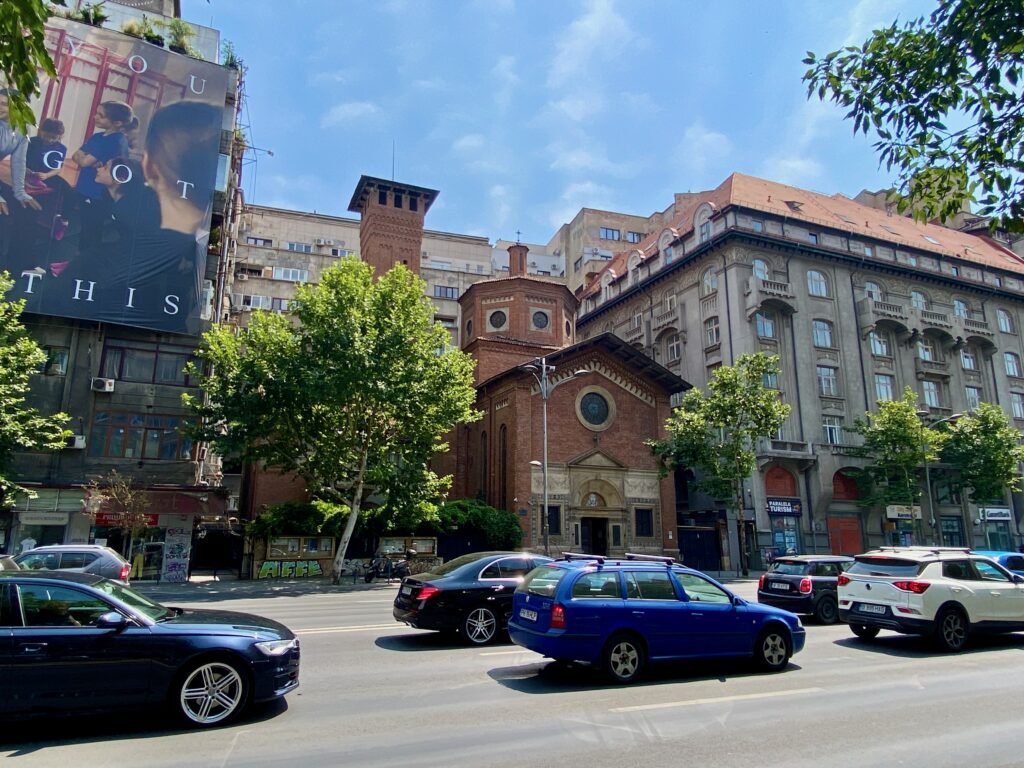
We stayed near Piața Revoluției (Revolution Plaza) which was a good area to be (though we would not recommend our Airbnb, which had one of the most peculiar layouts and the loudest elevator we’ve encountered in Europe, and that’s saying something since we live in Spain!). The neighborhood just to the north, around the Roman Athenaeum, is curious to explore, as you’ll stumble across stately Parisian-like buildings and charming corner shops but are otherwise confronted with graying, dismal Communist block-style housing. In the post-WWI period during the Communist dictatorship, Bucharest went from being known as “Little Paris” or the “Paris of the East” to a megalomaniac’s homage to Moscow. Hence why you’ll see the sporadically-preserved church or historic structure amidst stark, decrepit blocks, making for a disorienting, puzzling architectural experience.
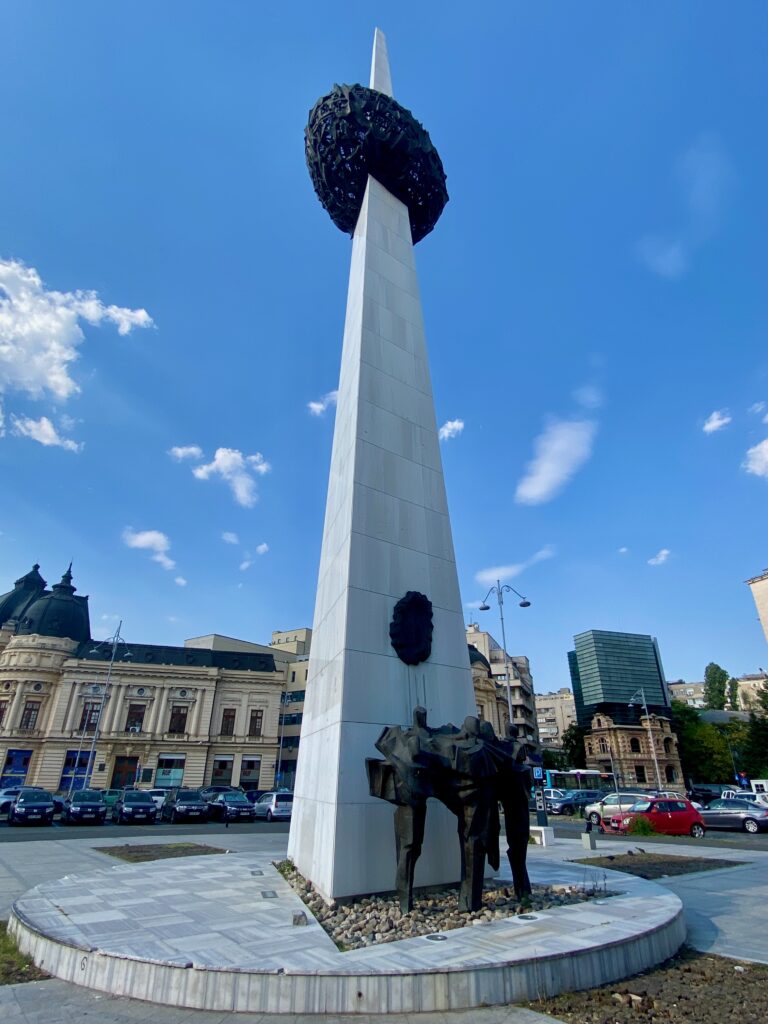
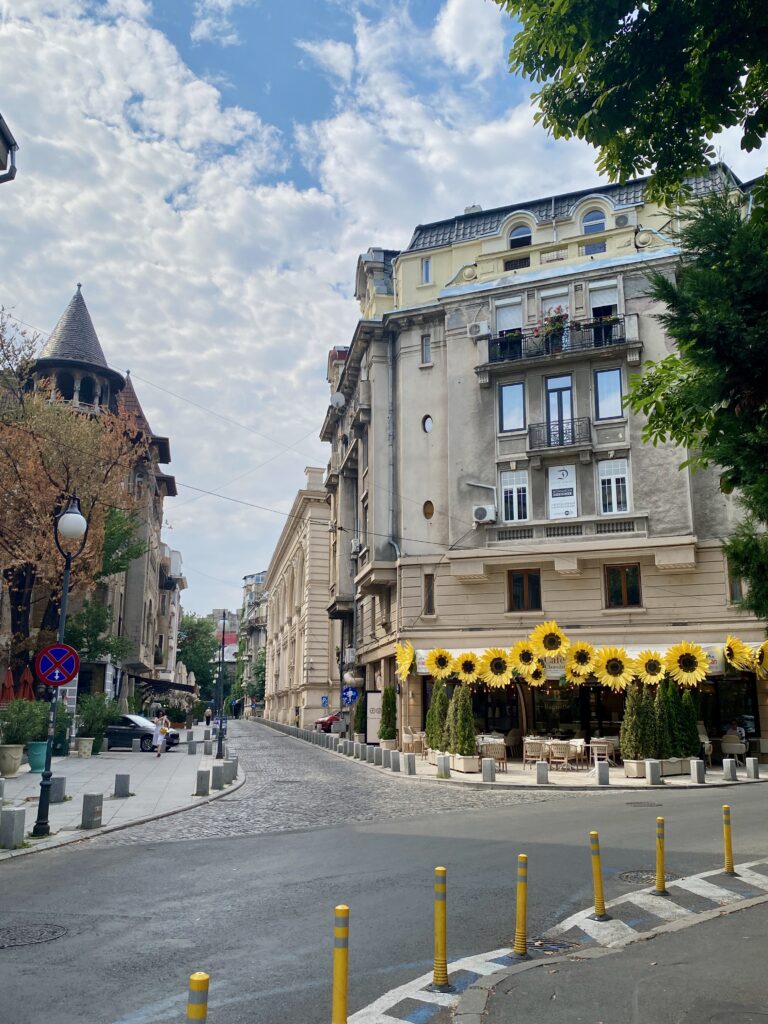
We knew little about the details of the Soviet occupation followed by a totalitarian communist state under two dictators, most notoriously, Ceausescu, from 1944-1989, as a Soviet satellite. So we appreciated taking Walkabout’s History of Communism city tour on our first day and being guided through the Palace of the Parliament; both guides were frank about the harsh, brutal, repressive realities under the regime, including their own families’ personal experiences. With the public execution of Ceausescu and his equally ruthless wife, things didn’t change quickly after the revolution, as the party’s second tier took over the country until the early 2000’s. Romania joined the European Union in 2007 but the country continues to recover from this period in many ways. Interestingly, Romania is the only Eastern European country whose language is Romance rather than Cyrillic-based.
Some highlights of a four-day itinerary (in hindsight, 2-3 days is sufficient for Bucharest, though you’ll want to bake in that third day if you plan to visit Therme):
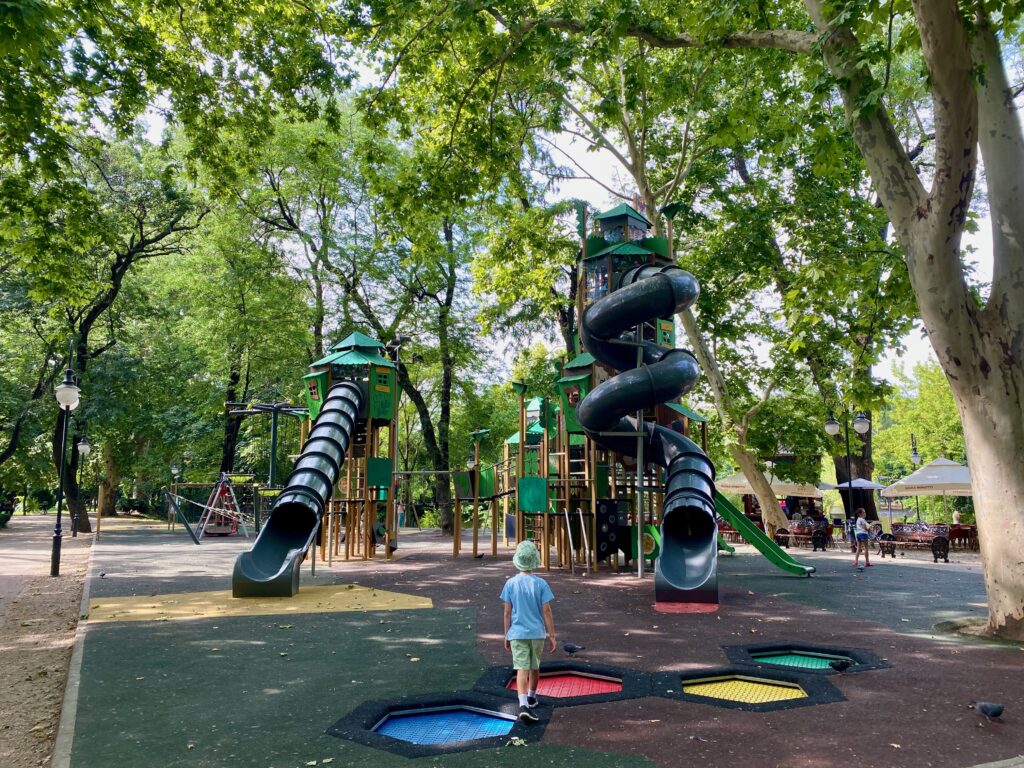
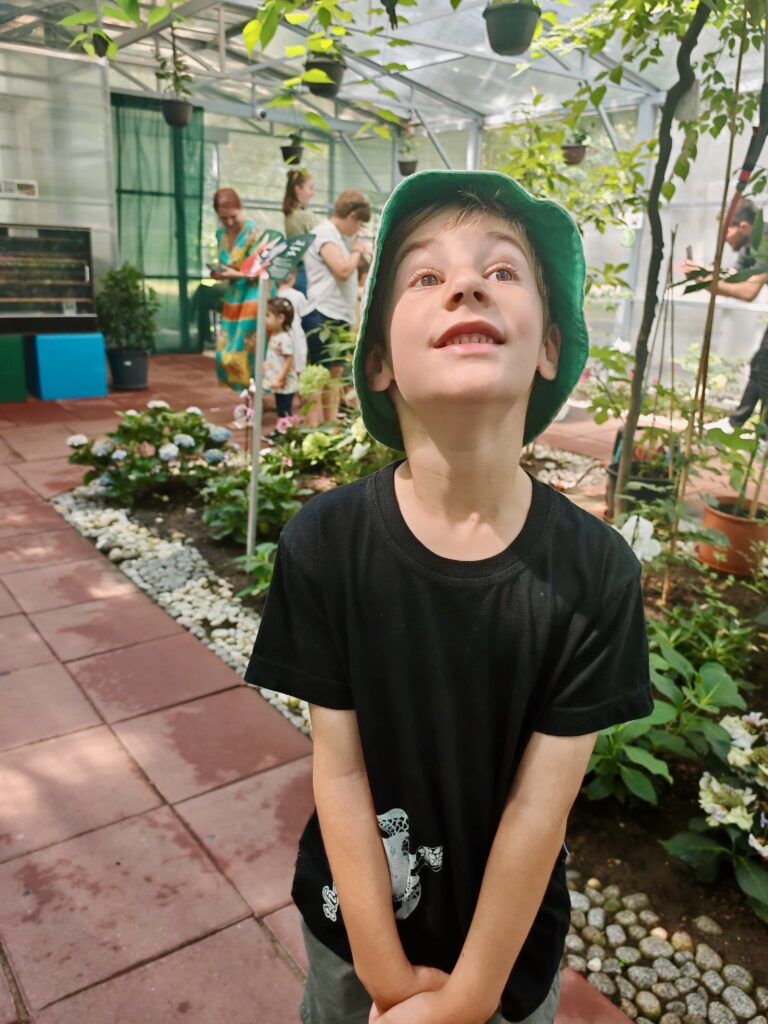
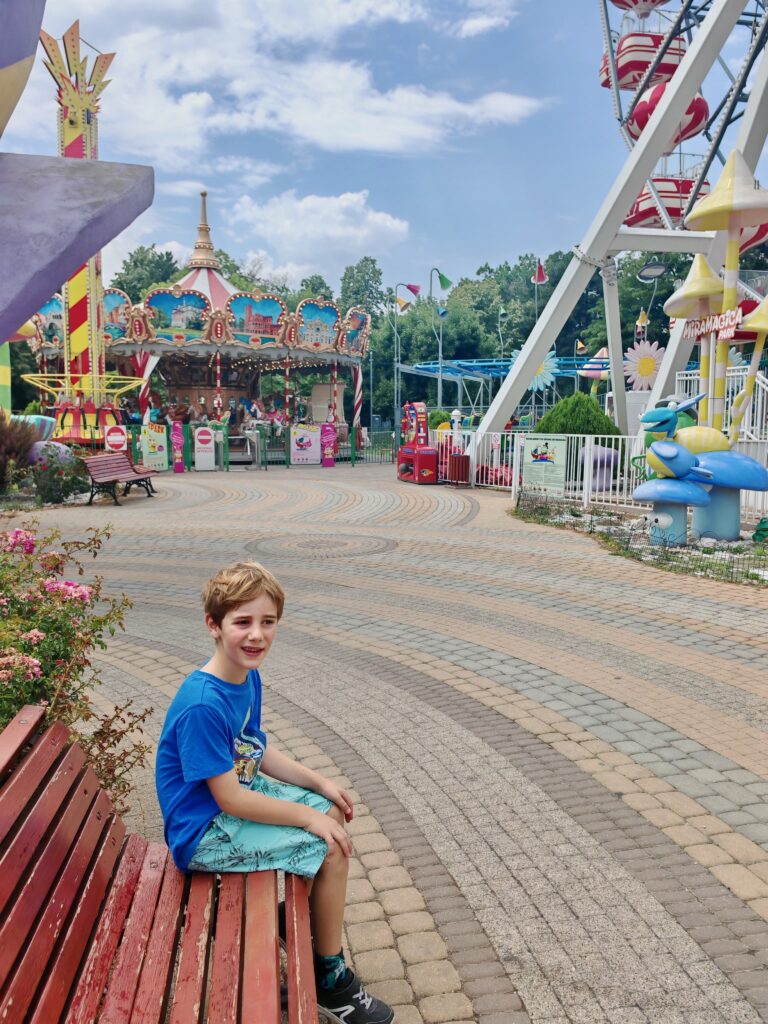
- stroll through Bucharest’s giant parks and gardens like Cismigiu, Herastrau, and Tineretui. Cismigiu Park was closest to where we were staying and had a fantastic playground, featured below. A friendly, fun-loving local babysitter named Carina also took Jacob on outings to the Grigore Antipa Natural History Museum (dinosaurs and more) and the Bucharest Zoo.

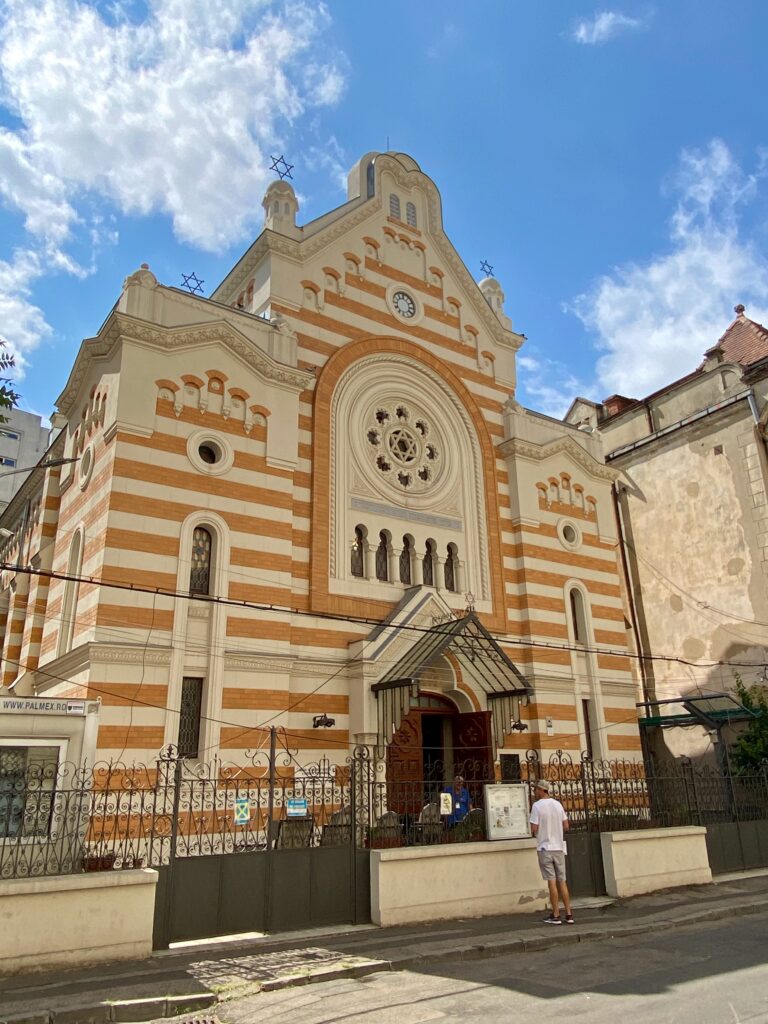
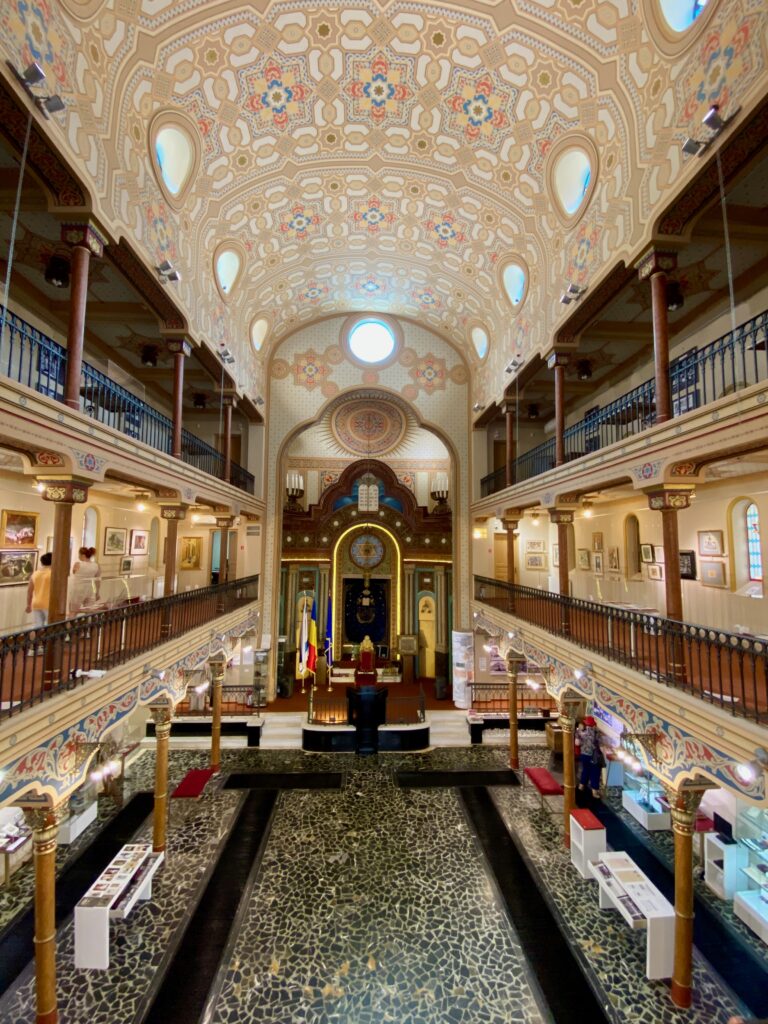
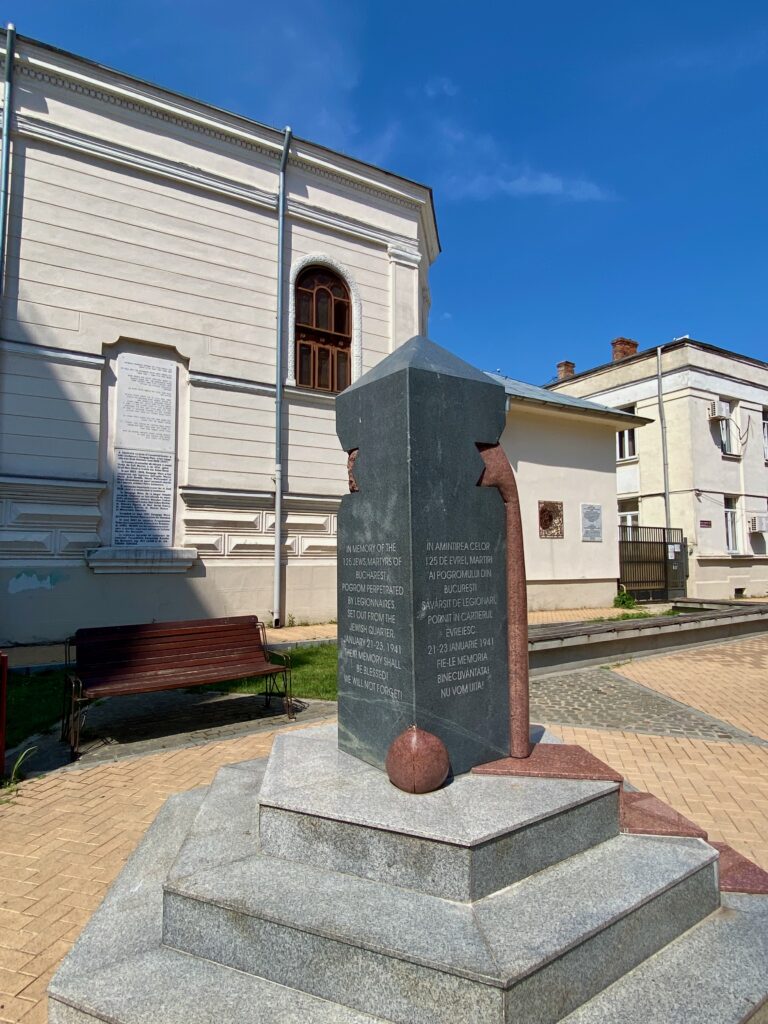
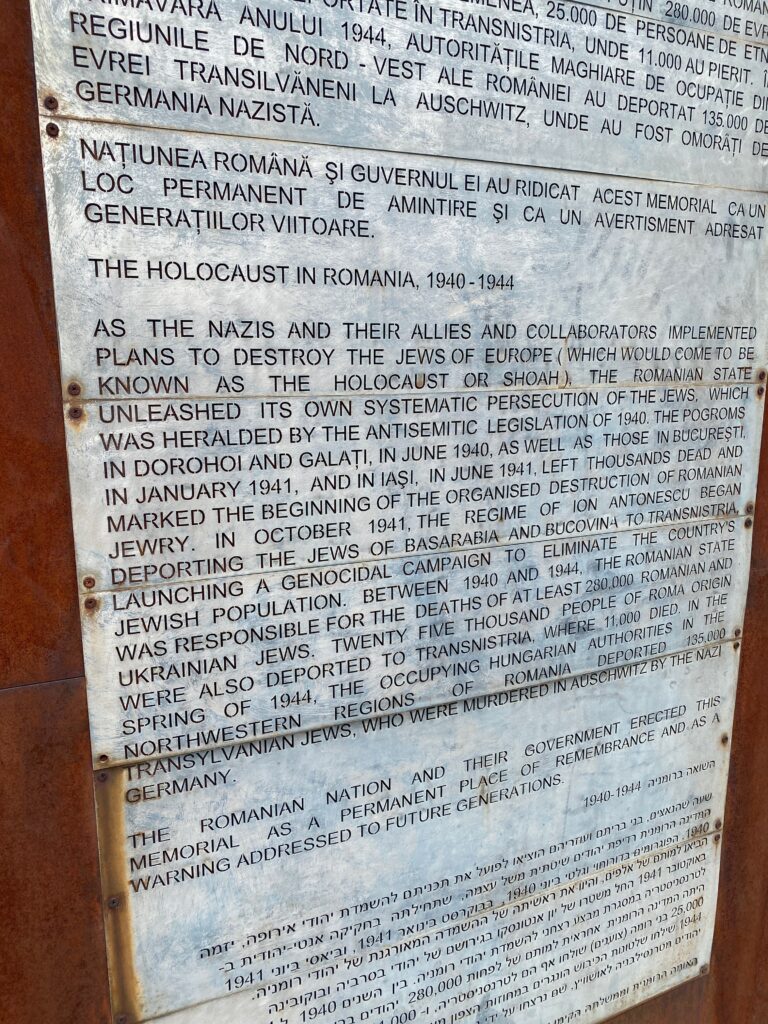
- Jewish quarter – we visited the few remaining synagogues and the excellent Jewish History & Culture Museum housed in the former Templul Unirea Sfântă synagogue, built in the 19th century, which somehow survived centuries of pogroms, the Holocaust, post-war Communism repression, and an earthquake; the synagogue was closed in 1966 due to the lack of a congregation. The Jewish History & Culture Museum is certainly worth visiting for educational purposes, featuring exhibits about the American Jewish Joint Distribution Committee, a Jewish humanitarian organization providing services pre- and post-war to orphans and refugees; artifacts including forced labor arm bands, Jewish stars, and bullets from victims of the Bucharest Pogrom in 1941. The museum is more worthwhile to visit than Bucharest’s Holocaust Memorial, which unfortunately is unremarkable and neglected, other than a plaque summarizing the extent of Romania’s persecution of its Jewish and Roma population and genocidal collaboration in the Holocaust. Bucharest’s Jewish population is only about 2,000 people now, compared with over 70,000 pre-WWII. Of Romania’s 800,000 Jews, 500,000 were deported and killed by German, Romanian, and Hungarian fascists.
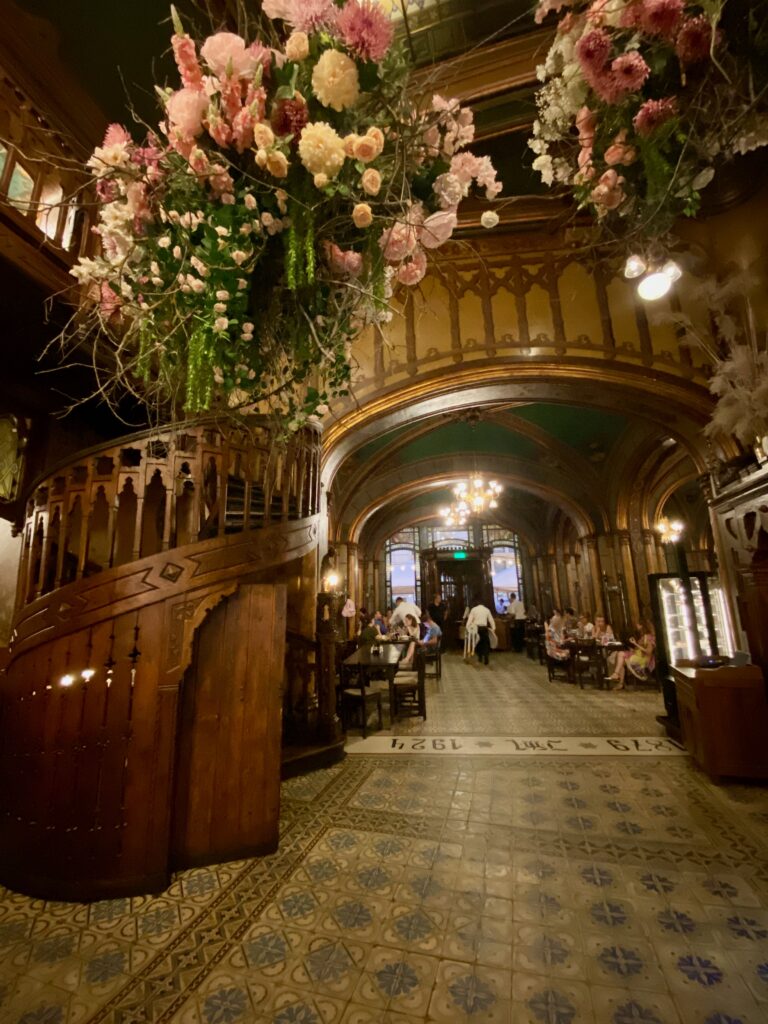
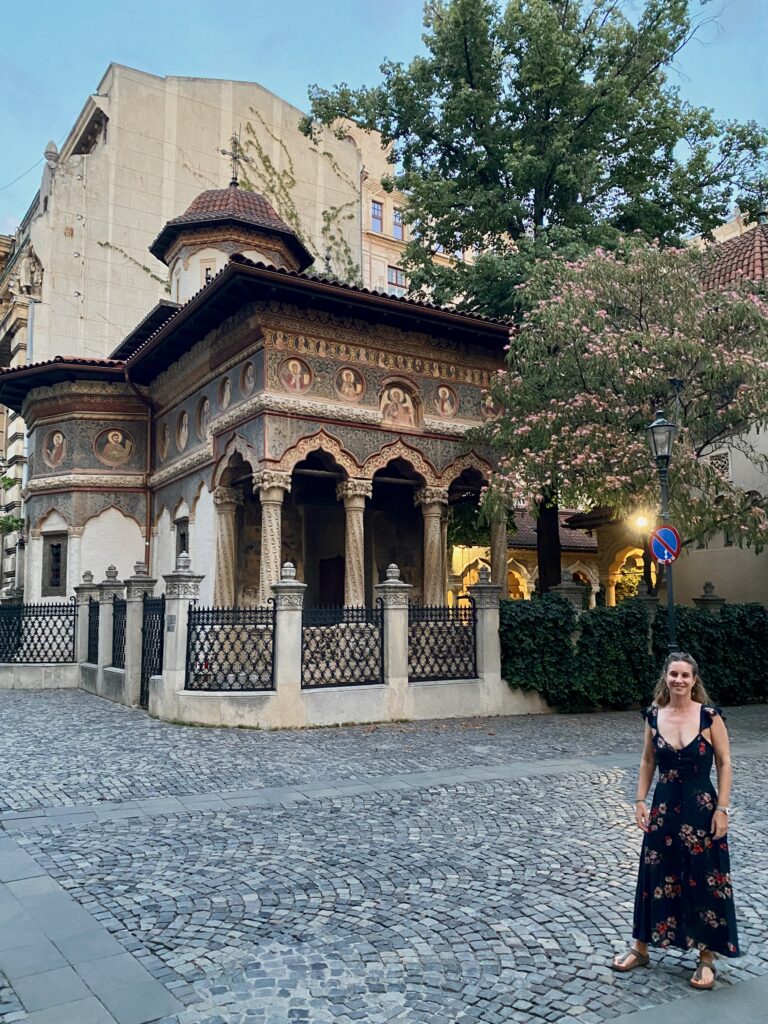
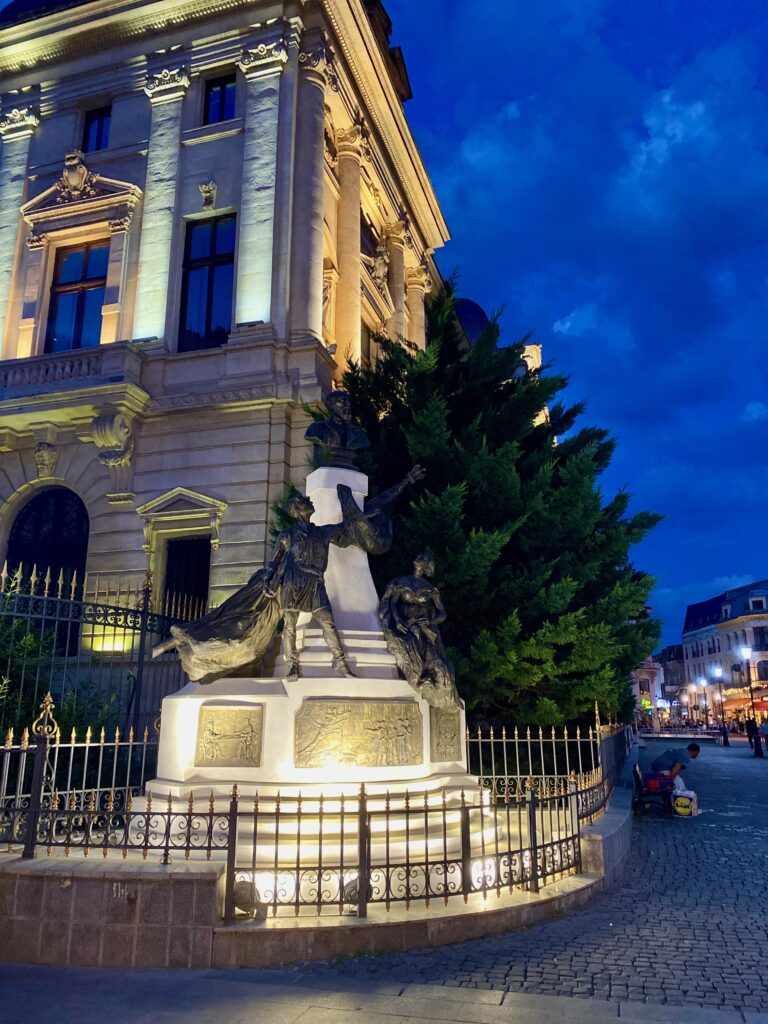
- “Old Town” Bucharest – remember that Bucharest’s historic core was destroyed to build the Palace of the Parliament. So most of what we see in the Old Town, other than the occasional preserved church, is reconstructed. We weren’t so wowed by this area but some visitors may still want to visit the Carturesti Carousel bookstore and the Macca – Vilacrosse Passage, which will remind some of a similar passageway in Milan. And the well-regarded Caru ce Bere restaurant (mentioned below) is located here, so it’s worth a visit.
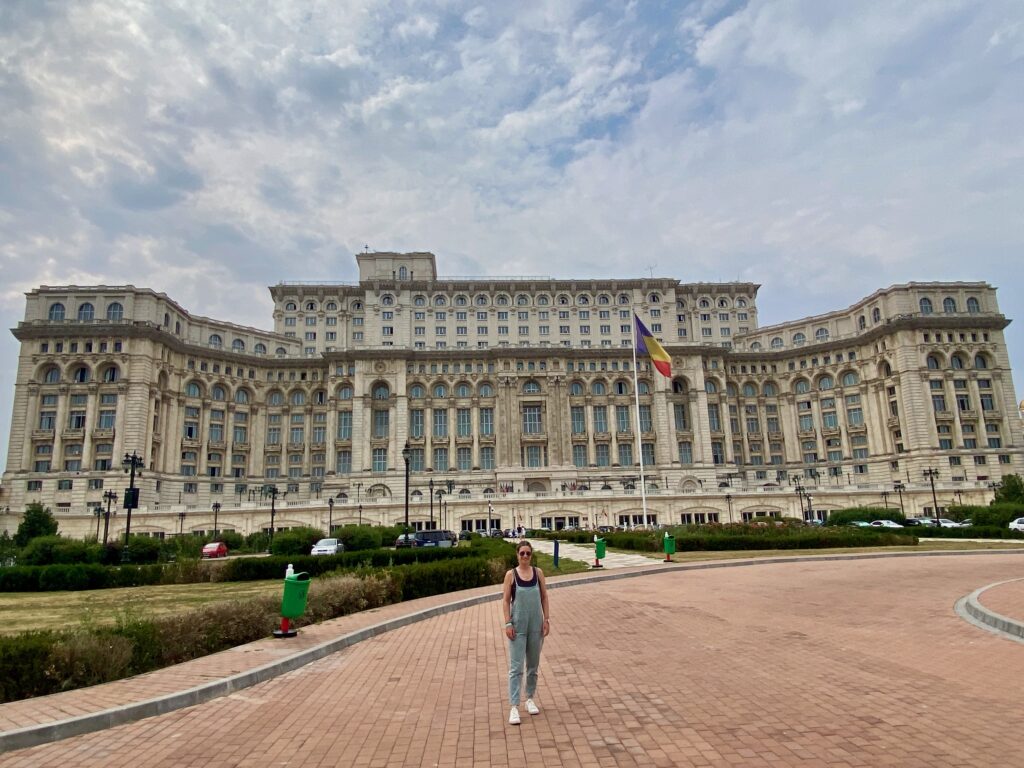
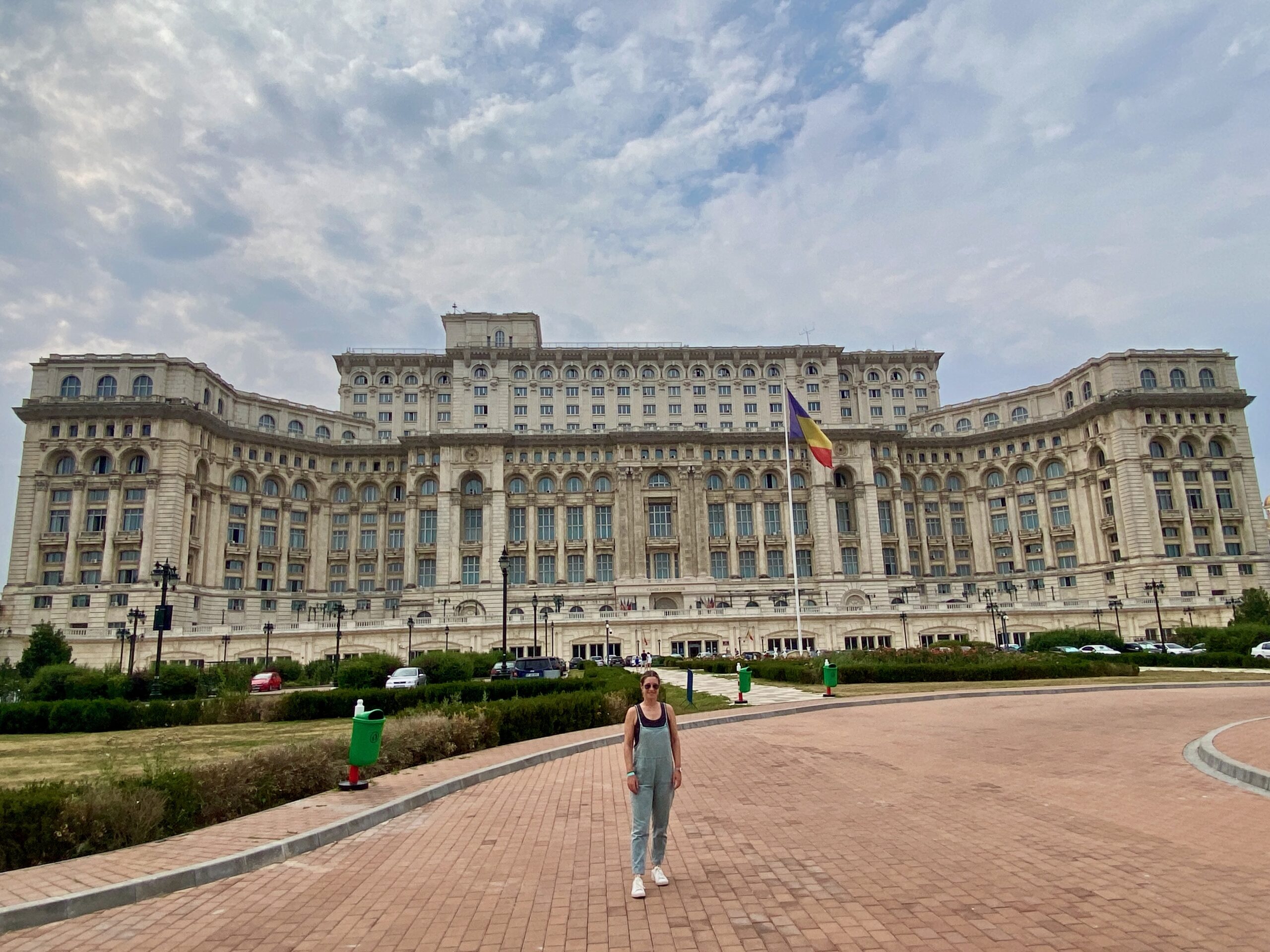
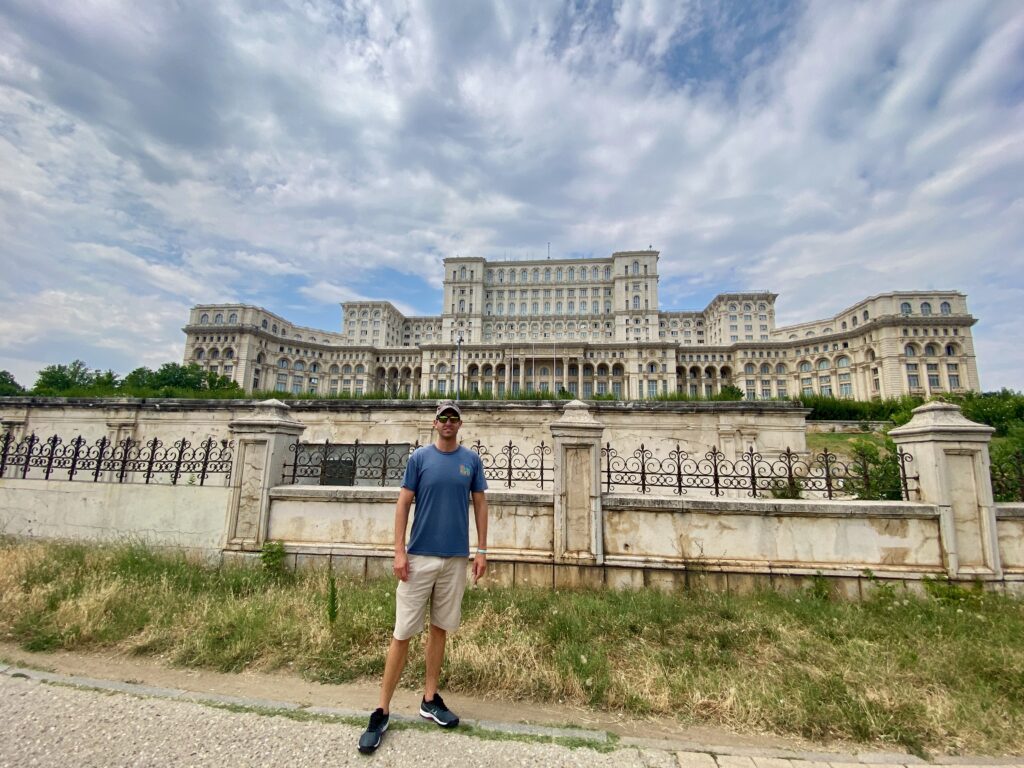
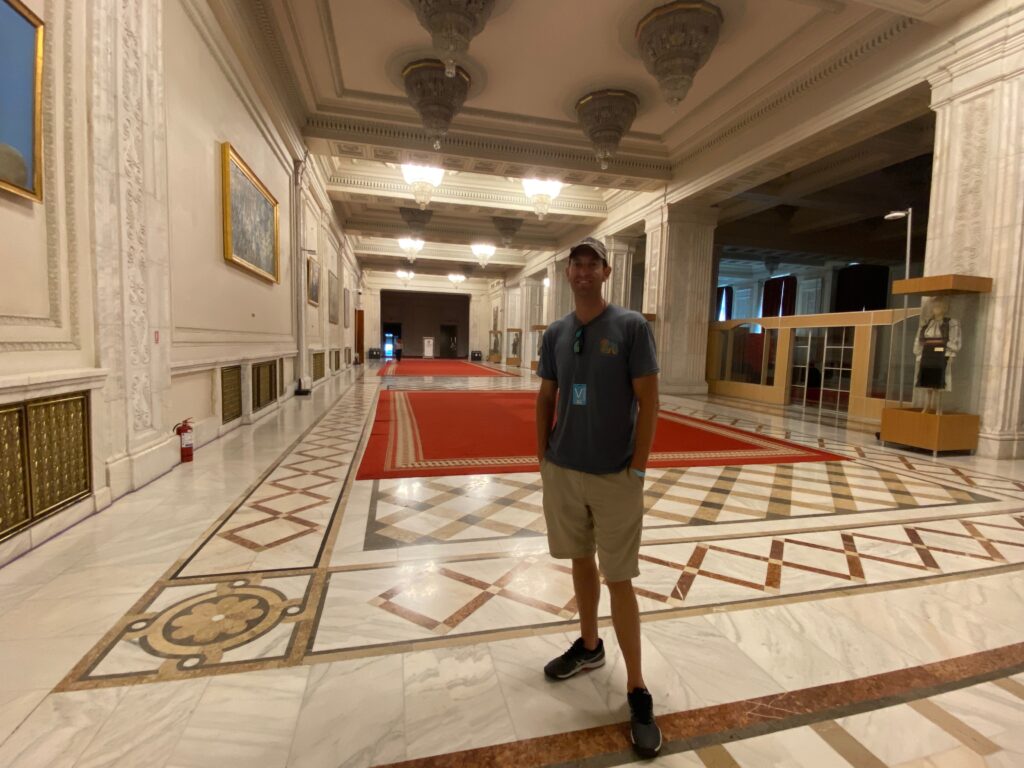
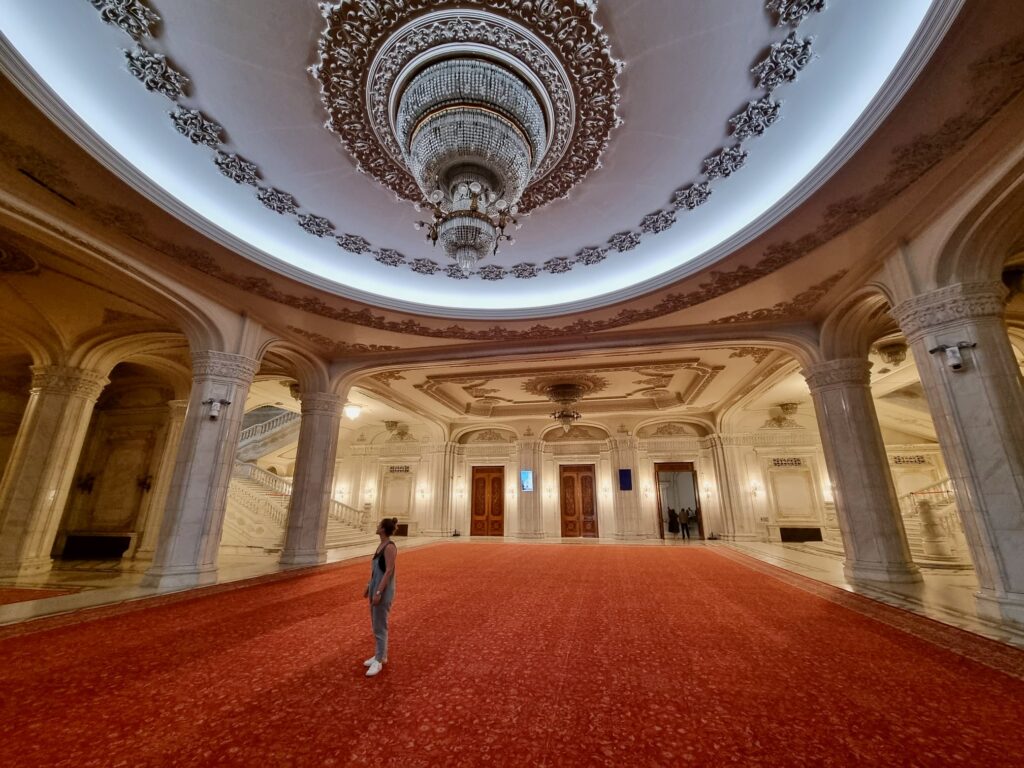
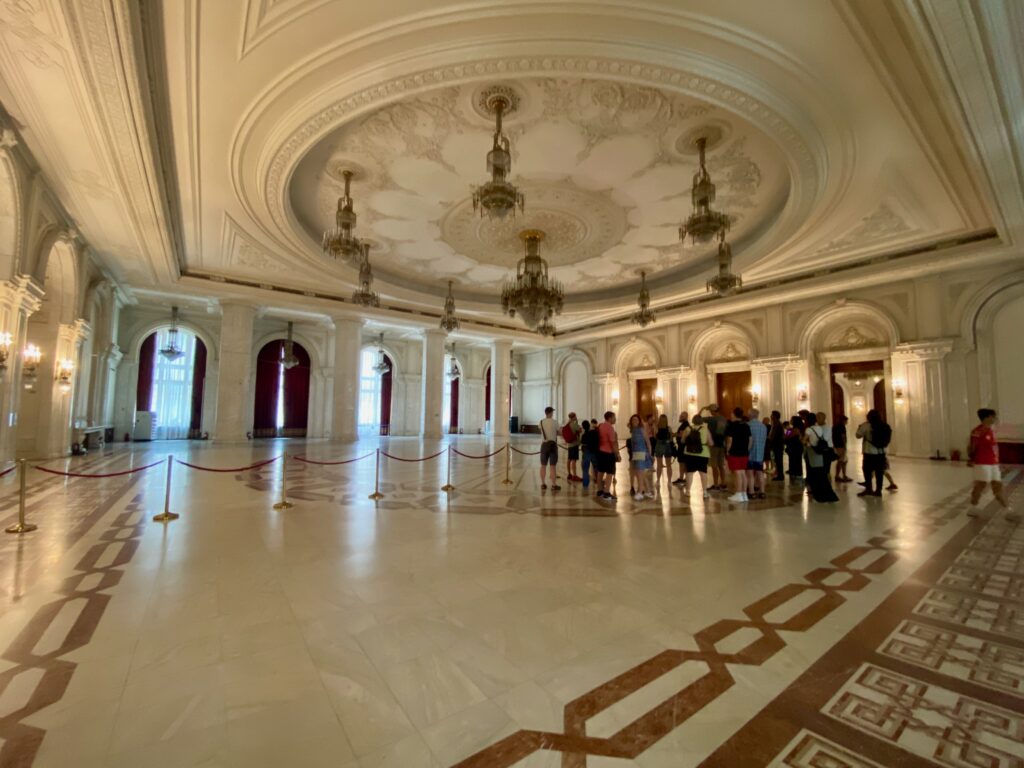
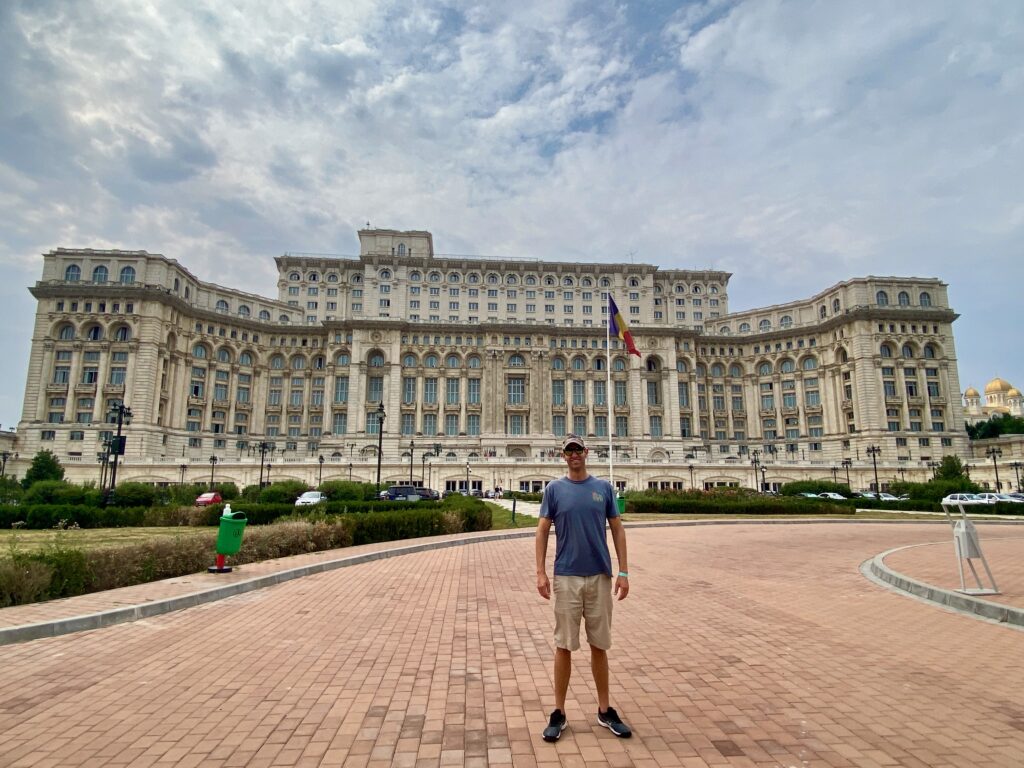
- Palace of the Parliament, Ceausescu’s 1980’s vanity project and the second largest administrative building in the world (after the Pentagon); 35% of the city was destroyed, 50,000 were displaced, and many thousands more were killed to construct it. The Palace of the Parliament is cavernous and significantly empty, sumptuous beyond belief. While Ceausescu was destroying local culture and heritage in the name of “progress,” the inspirations were Buckingham Palace, Versailles, and the Winter Palace: absurd, bizarre, ultimately quite sad. Getting tickets for the Palace tour is more complicated than it should be, so it’s easiest to book through one of the operators on Viator, GetYour Guide, Trip Advisor, etc.: basically you’re just paying a premium to be walked from their office up to the Palace entrance and through security, where you’ll then wait for the guided tour.
- Therme – a massive, elegant indoor/outdoor water and sauna/spa park for both kids and adults to enjoy, located about 30-40 minutes north of Bucharest. We were having so much fun, I forgot to take photos!
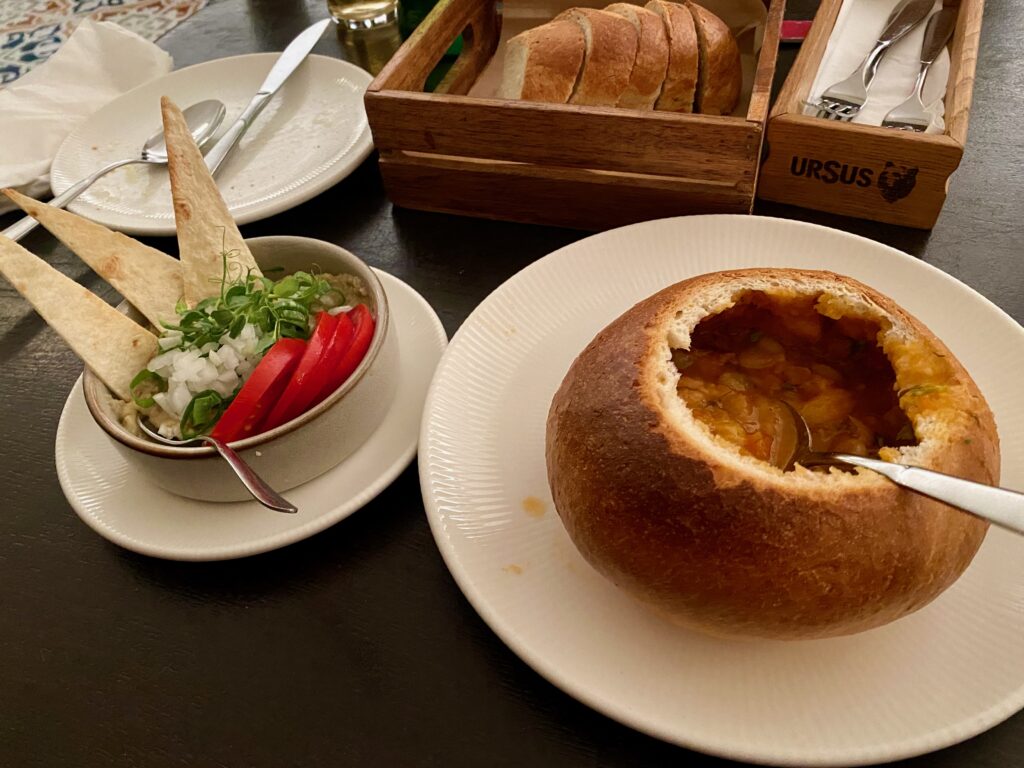
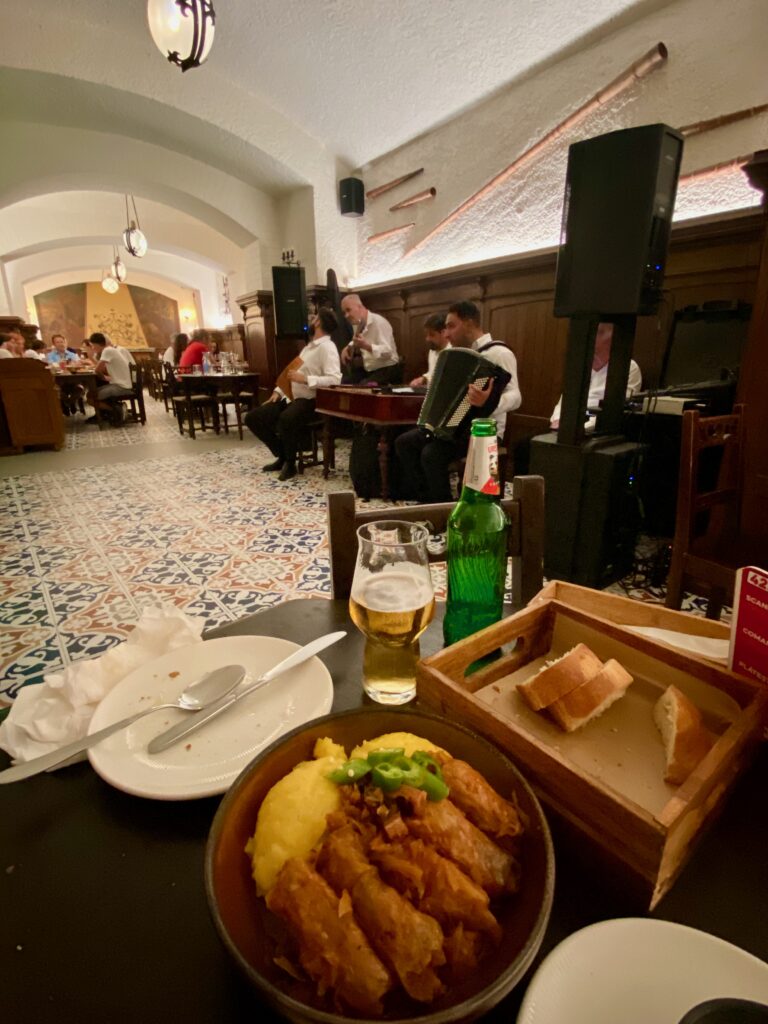
Typical Romanian foods were heavier and heartier: soups, cabbage, potatoes, etc. — we sampled some traditional dishes (accompanied by local music) such as sarmale (stuffed cabbage rolls), salată de vinete (Romanian eggplant dip like baba ganoush), and mămăligă (polenta, eaten with many dishes) at the popular restaurant, Caru ce Bere (featured in the photos). We also had good meals at Alt Shift (a Romanian gastropub) and lovely salads and healthy fare at Boutique du Pain Restaurant Bucuresti.