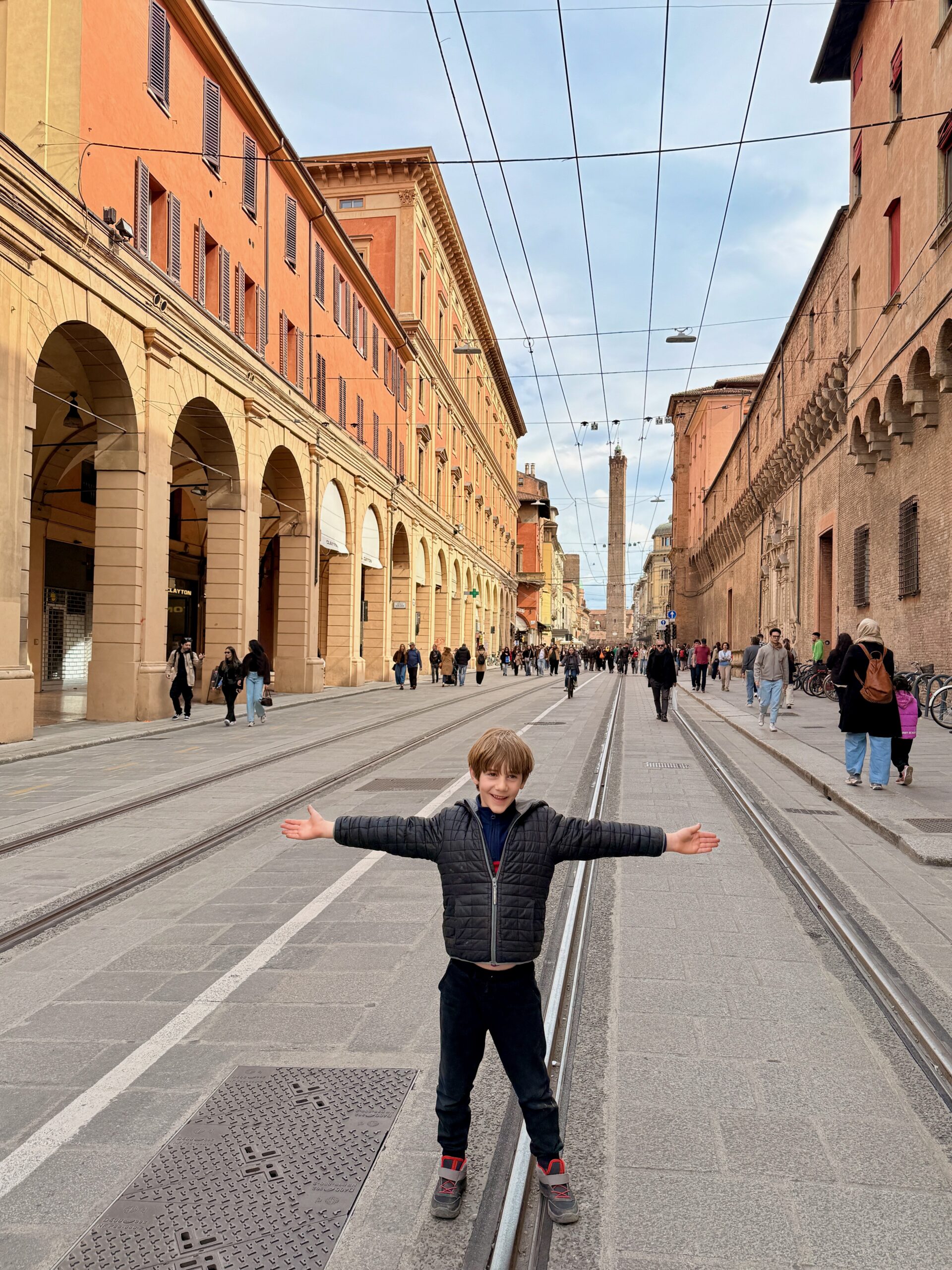
Bologna had been on our list for a while, based on recommendations from Italian and other friends who have visited from Valencia. Bologna is an easy destination for a long weekend or as incorporated into regional tourism in Emilia-Romagna. We visited in mid-March, when the weather was mild and the city not overrun with tourists, which felt like an opportune moment.
Getting There and Around
Getting from the airport is easy: there’s a monorail tram that connects directly to the city center, though it is a surprisingly small tram with only a few compact cars and doesn’t run as frequently as the airport demand seems to necessitate; we ended up waiting for almost an hour for a 15-minute tram ride that only has two stops. Taxis or Uber are also available for airport transport if you’re short on time or have a lot of luggage.
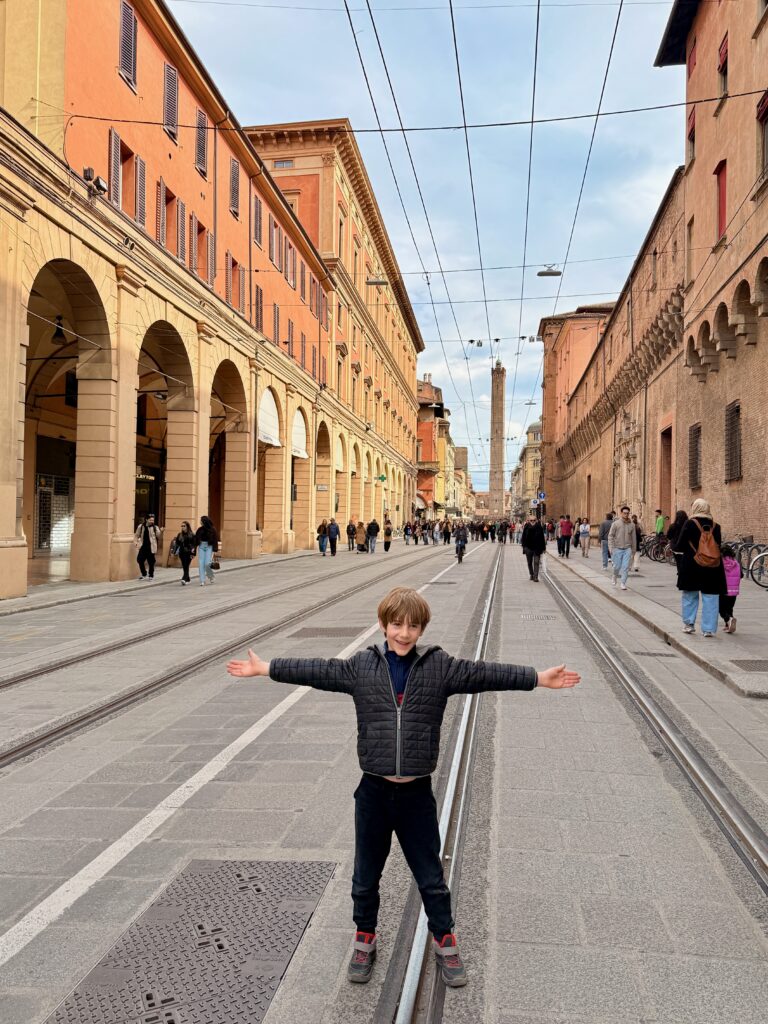
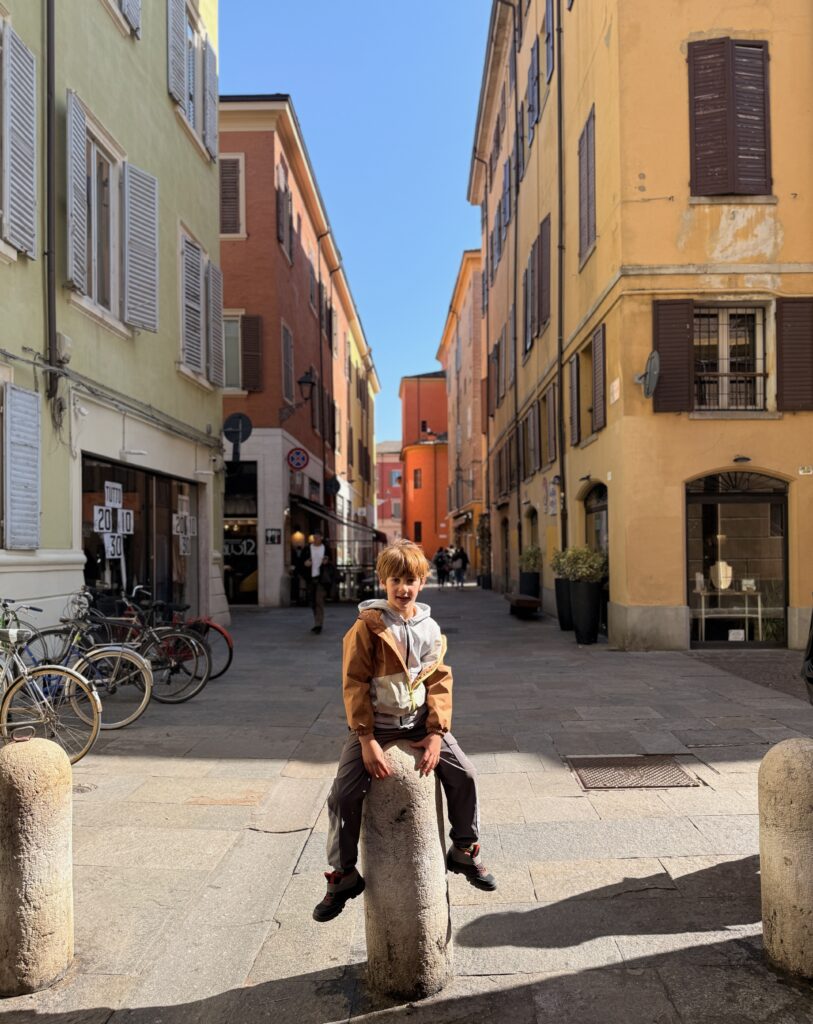
Once you’re in the center, you really don’t need anything else; the city is compact enough that everything is on foot, and many streets are fortunately pedestrianized and car-free. Everything worth seeing in Bologna sits within the Viali di Circonvallazione, the old ring road. Once you’re inside it, you won’t need a car or even public transit, as everything is walkable. We stayed in an Airbnb near the Parco 11 Settembre, which turned out to be a nice base. Bologna is also one of those rare cities where wandering aimlessly is its own activity: you keep stumbling onto something worth stopping for, whether gelato, salumeria products, or other shopping.
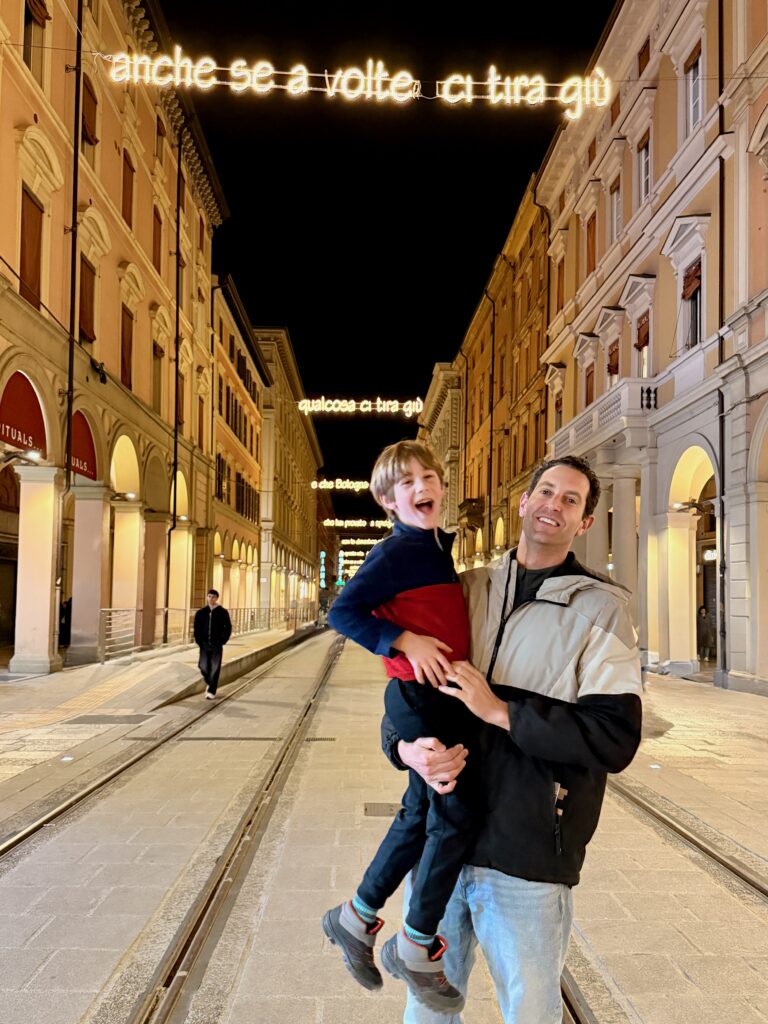
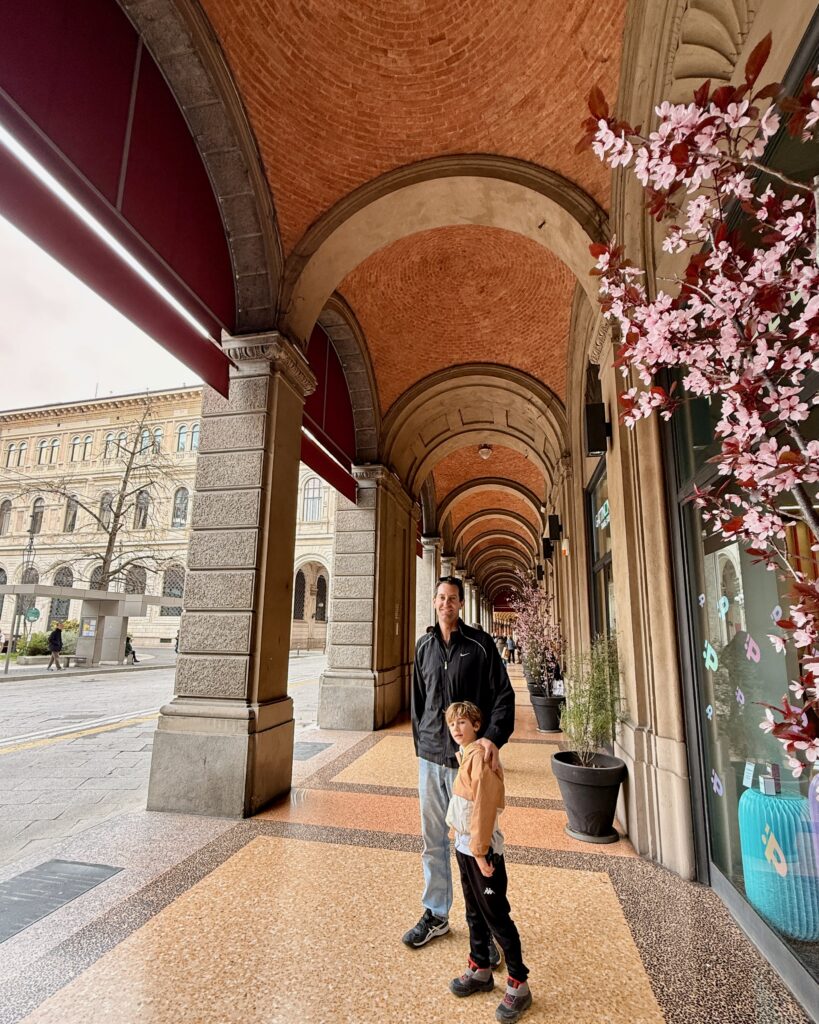
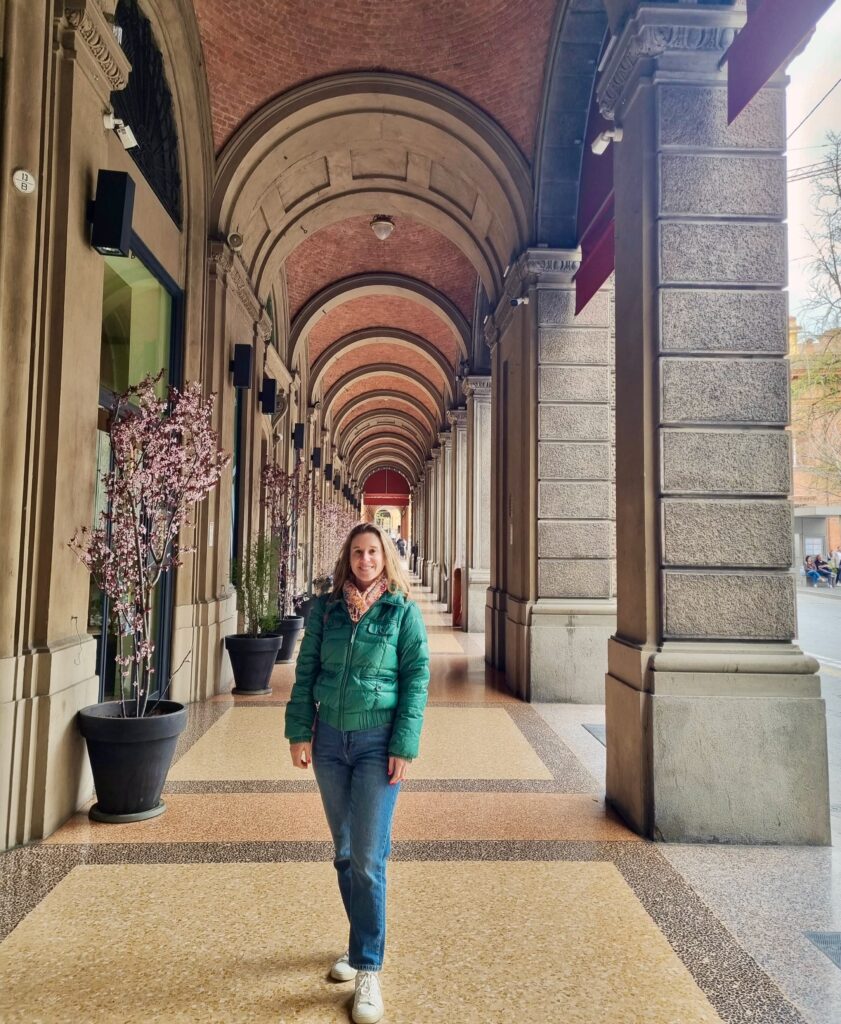
One thing that makes Bologna genuinely special for families is the porticoes, these historic, charming covered walkways that run for kilometers throughout the city, and help you walk pretty much anywhere around the city center without worrying about the weather.
What We Did
Bologna is a city you explore on foot without a strict agenda, which suited us perfectly. A few highlights:
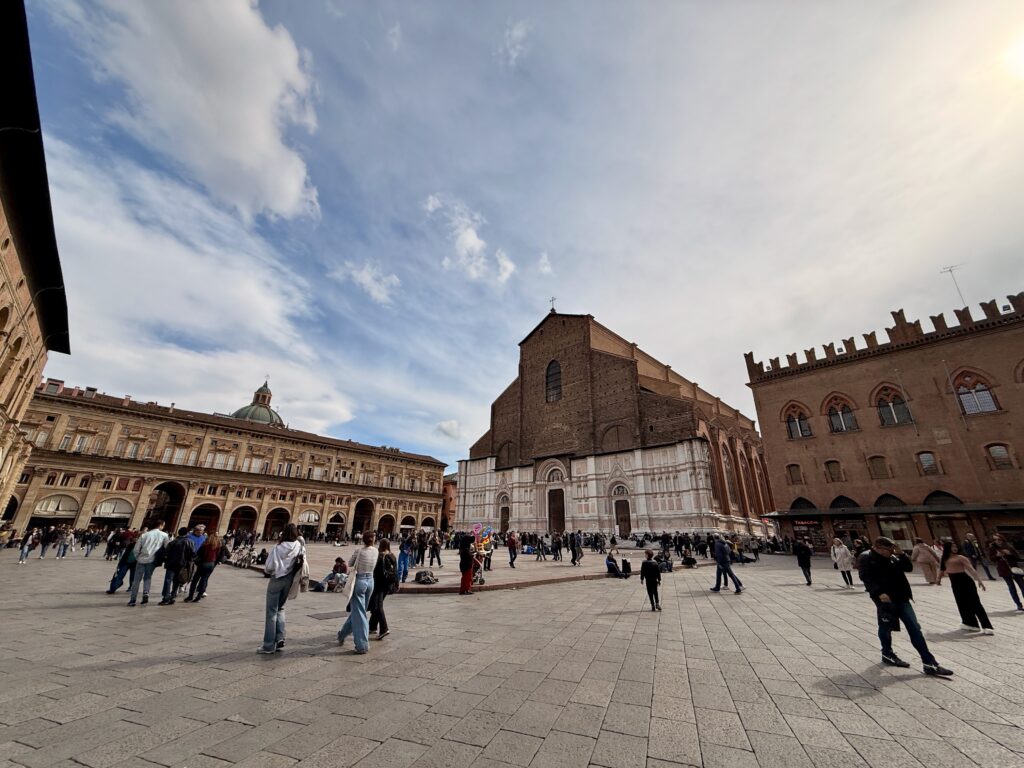
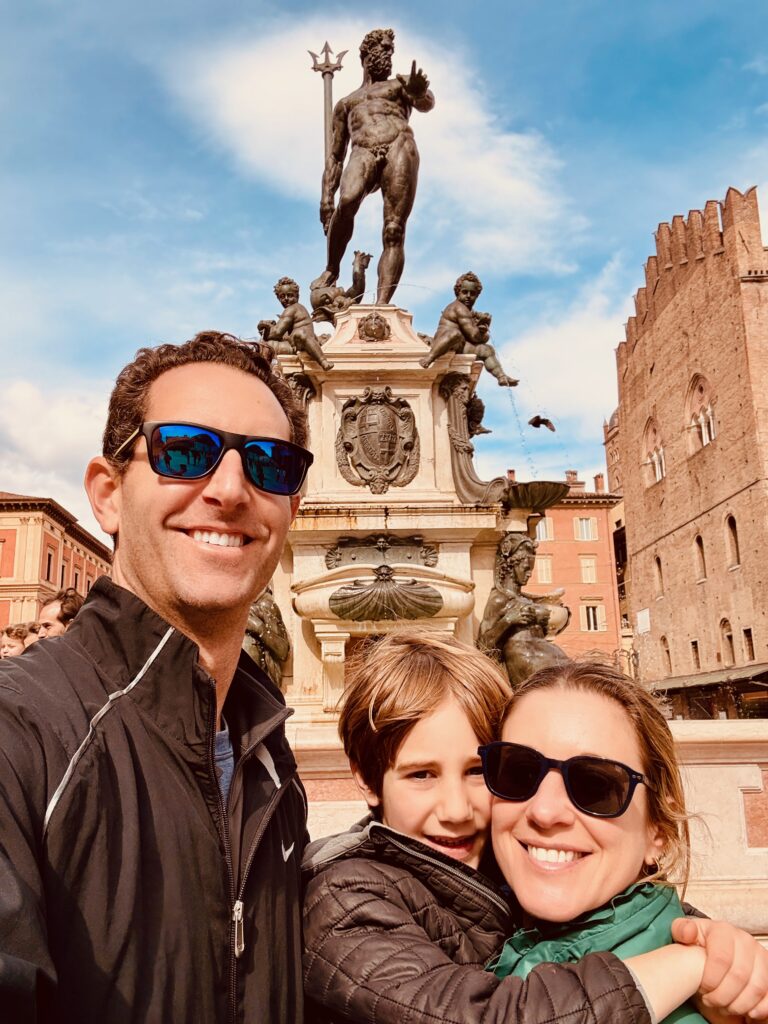
Piazza Maggiore and Piazza del Nettuno: The two central piazzas are the obvious starting point and absolutely worth it. The Neptune fountain in Piazza del Nettuno is one of those things that’s genuinely impressive in person in a way photos don’t quite capture. Jacob was, predictably, more interested in the pigeons. We also enjoyed reading about Bologna as the center of anti-Nazi and anti-fascist partisan resistance during WWII, as evidenced by the memorial photos and plaques along Piazza del Nettuno.
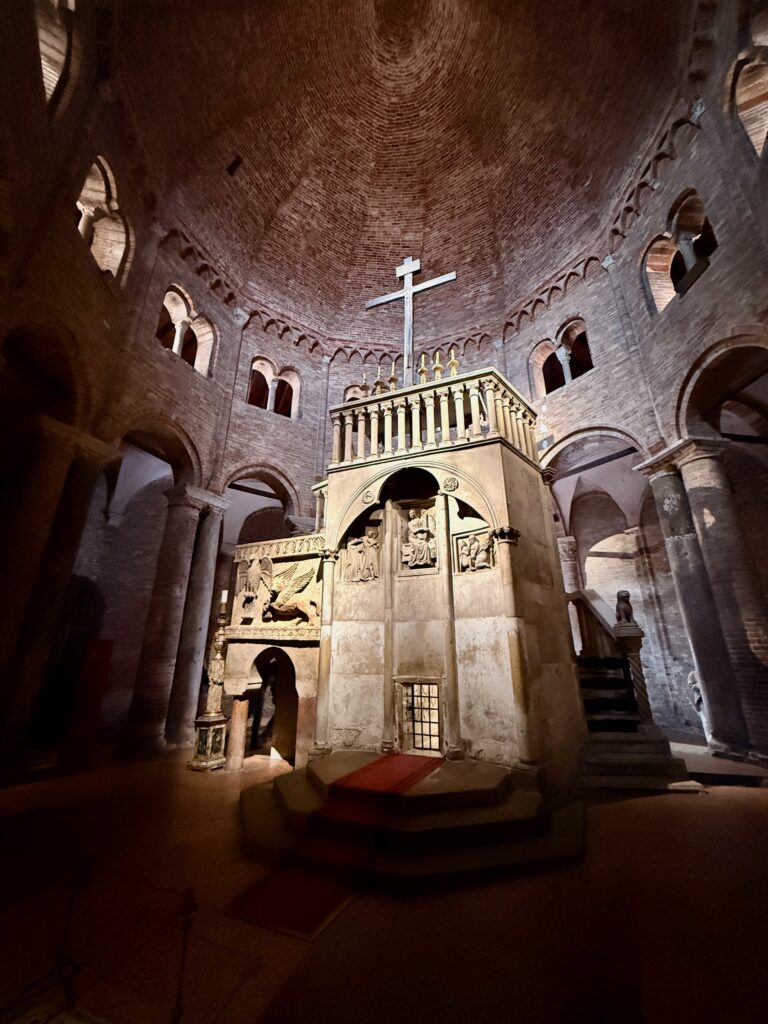
San Petronio Basilica: Massive, beautiful, and with a half-finished marble façade that’s a whole story in itself (the planned size would have overshadowed St. Peter’s in Rome, so… the Vatican had thoughts). Worth going inside.
San Francesco Basilica: Worth a visit, quieter and less touristy than San Petronio.
The Archiginnasio (the old University): The world’s oldest continuously operating university (almost 1,000 years old), and you can feel the history in every inch of it, as the walls and ceilings are covered in the coats of arms of former students going back centuries. Can’t say we were thrilled with the political messages we found in this section, but alas, it’s a university town.
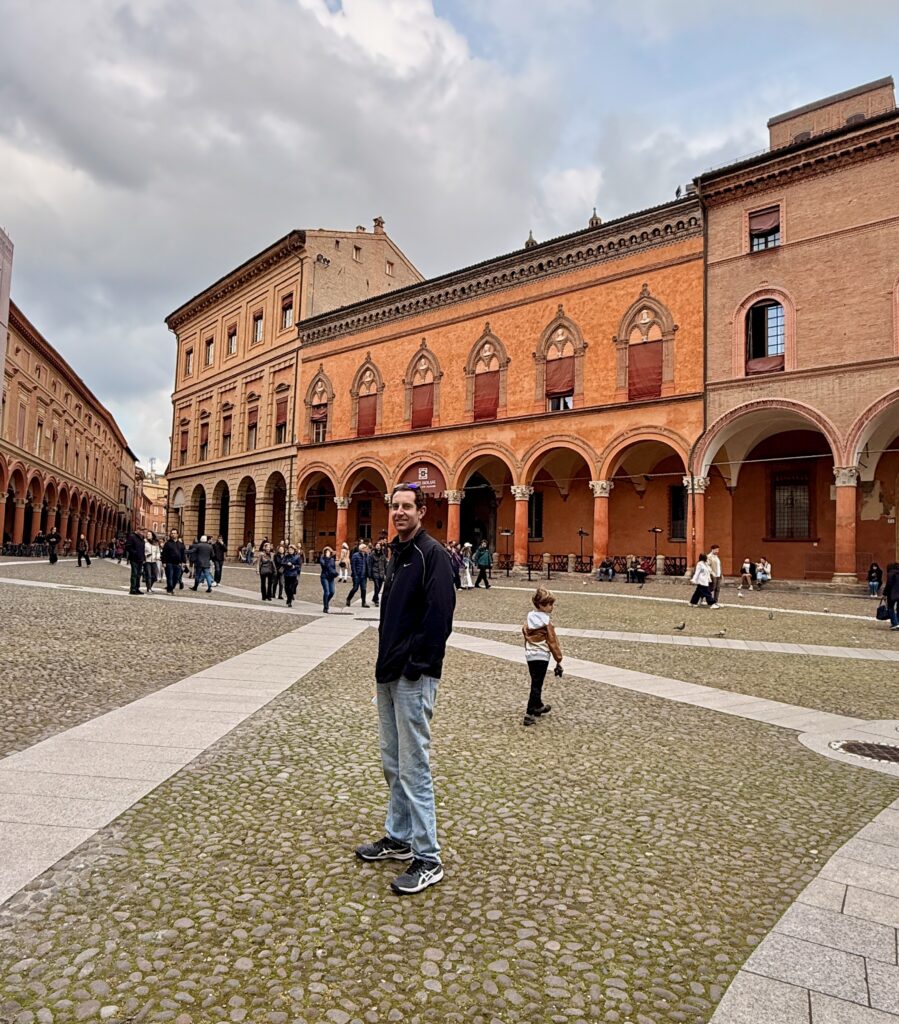
Via Santo Stefano (“church alley”): A charming medieval street lined with historic religious buildings.
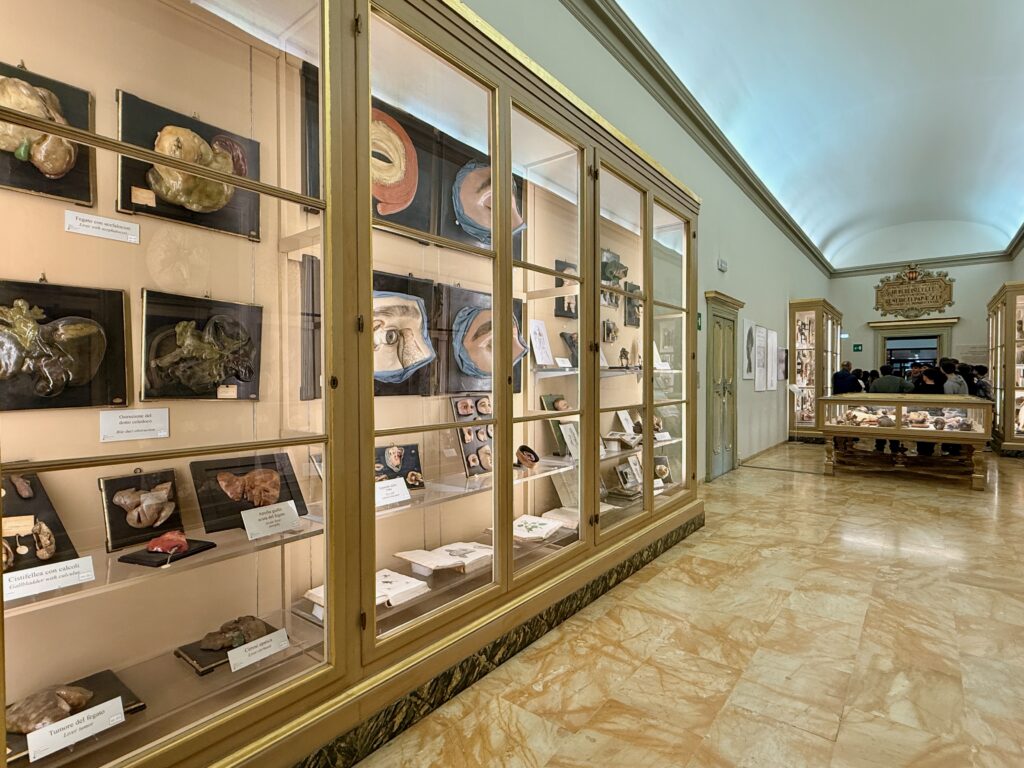
Museo delle Cere Anatomiche: The wax anatomy museum. Fair warning: this one is not for the faint of heart or the very young. It’s an extraordinary 18th-century collection of anatomical wax models created for medical teaching: fascinating and also a bit jarring. We found it memorable, but just know what you’re getting into and kids might be a bit spooked.
The Food (Obviously the Main Event)
This is the real reason to go to Bologna! It’s called La Grassa (“the Fat One”) for good reason. Everything is made locally and freshly, the ingredients are exceptional, and the region’s specialties that taste nothing like what you’ve had anywhere else are around every corner. Of all our visits to Italy, from our three-week honeymoon across many cities/regions to a dozen Italian destinations the past several years while living abroad, Bologna’s food was our favorite, which is saying a lot since usually you can’t go wrong with most Italian food.
Bologna’s Mercato delle Erbe, the covered food market, is a great orientation to the food culture before you start eating your way through the city: produce, cured meats, cheese, bread, the works. One of those markets you just want to spend an hour in even if you’re not buying anything.
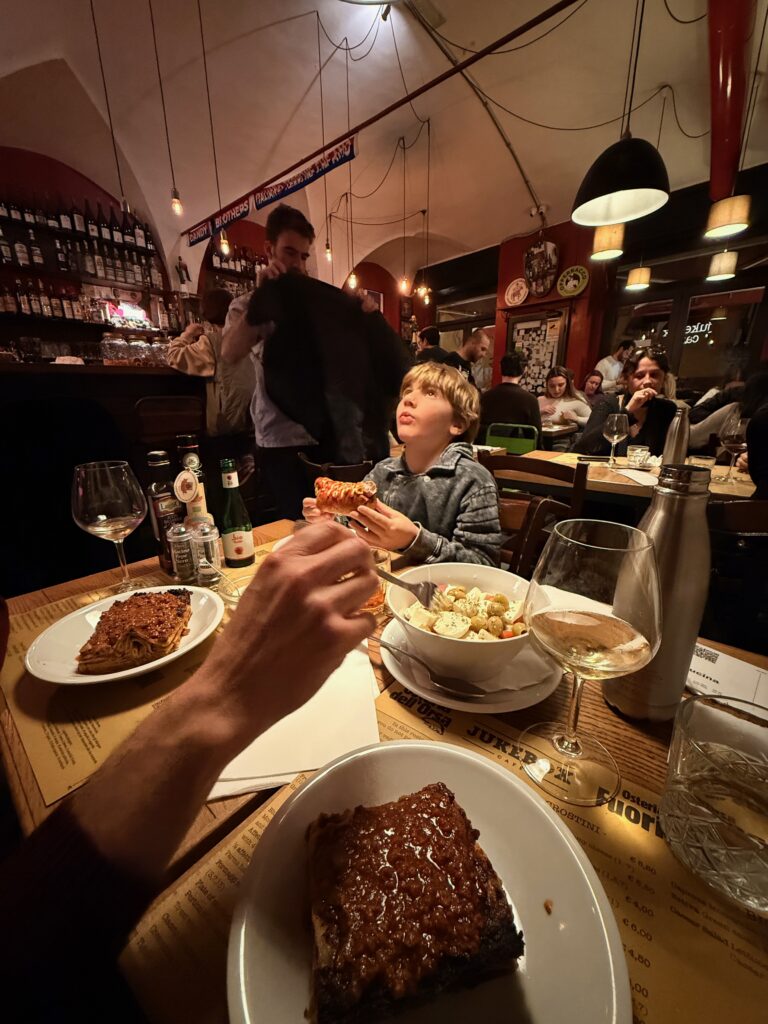
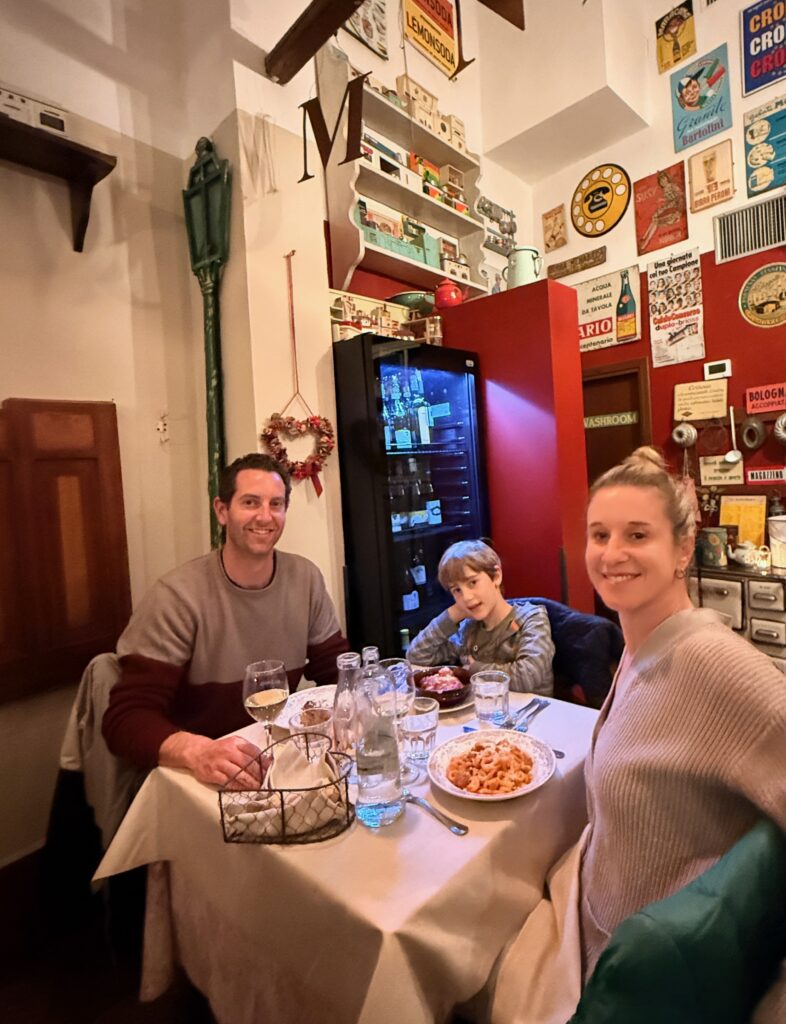
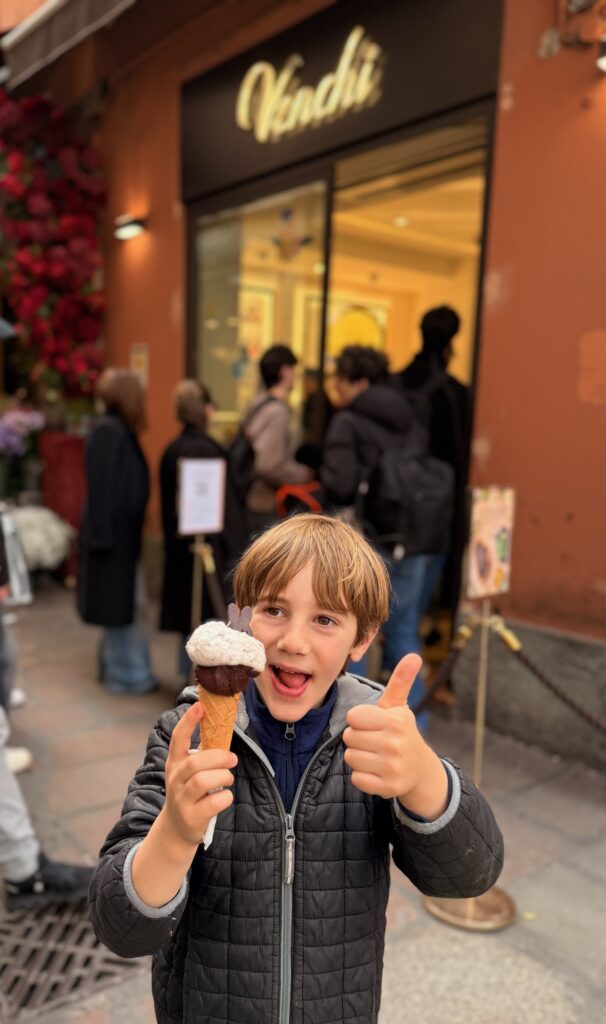
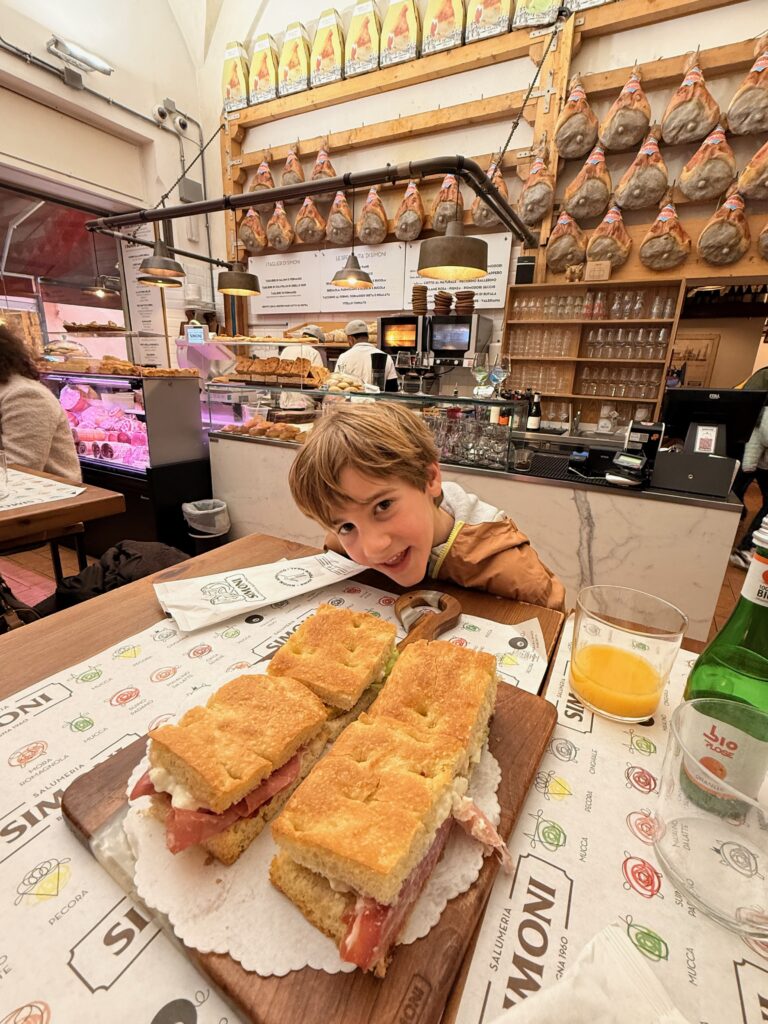
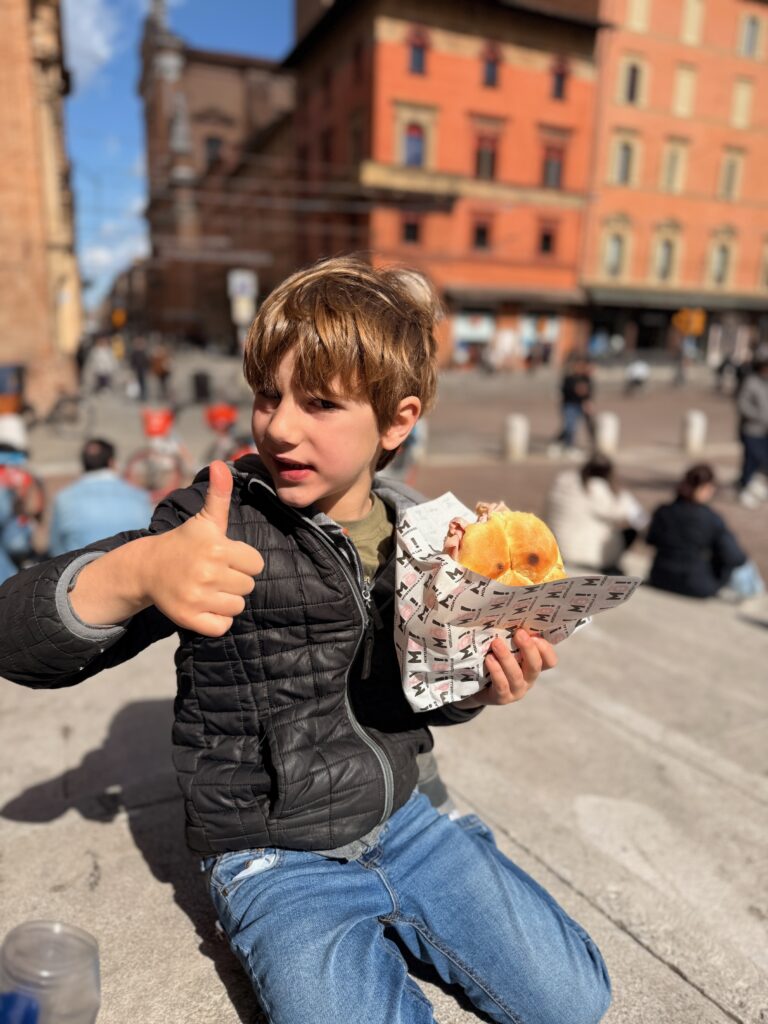
Food spots that stood out:
Delizie Bolognesi: For gelato and sweet treats. Really good.
Mo! Mortadella Lab: If you only understand one thing about Bologna’s food culture by the end of the trip, it should be mortadella, and this is where to understand it. It’s served in ways you wouldn’t expect and it’s excellent.
Simoni: A classic deli/salumeria with all the Bolognese staples done properly. We were entranced by the sampler of sandwiches. Go hungry!
Jukebox Café: The sister restaurant of the well-known Osteria dell’Orsa, and a great option for families. Good food, relaxed atmosphere, no stress.
Il Piatto Rotto: Exactly the kind of local trattoria you hope to stumble across. Honest, simple, really good.
All’Antico Vinaio: A famous chain around the world now, but their sandwiches (on the best bread) just can’t be beat and we always stop for lunch whenever we’re in a city with a location.
Forno Brisa Galliera: Fantastic bakery. The bread and pastries were exceptional, and exactly what you want for a morning in Italy.
Family tip: Bologna is exceptionally family-friendly at restaurants; Italians eat late and expect children to be part of the table. Don’t stress the timing. Nobody will hurry you out, and kids are welcomed rather than merely tolerated.
Day Trip: Modena
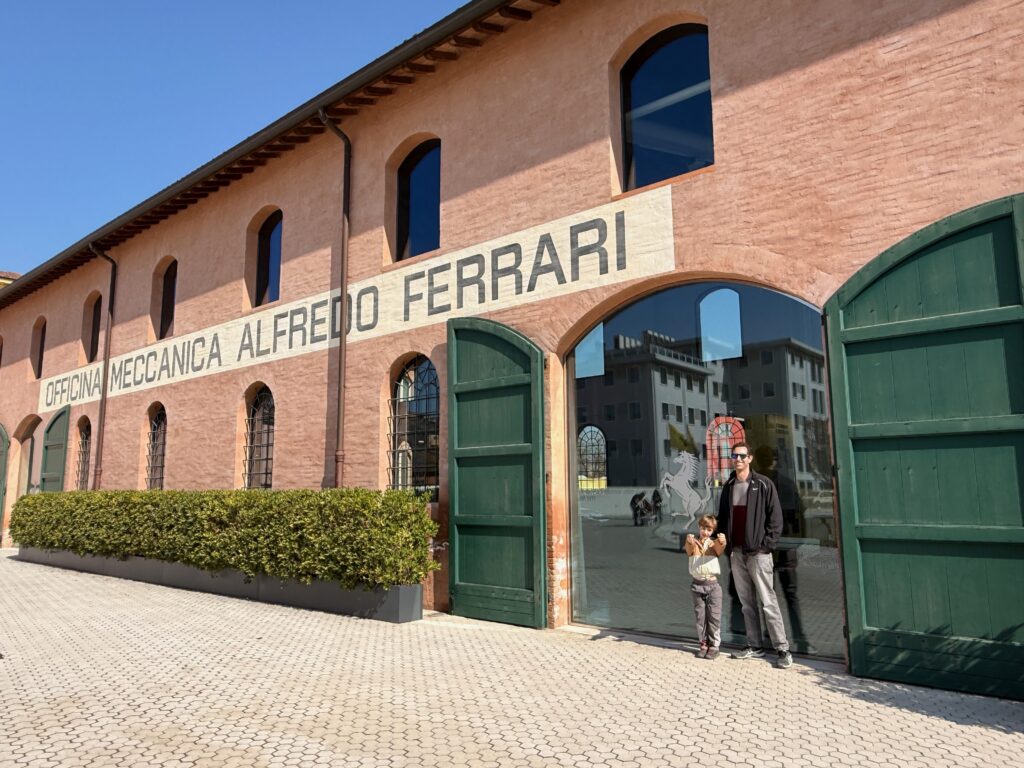
Just 35 minutes by train, and an entirely different flavor of Emilia-Romagna magic. The train from Bologna to Modena takes barely half an hour, and makes for a perfect day trip. We packed a lot in, and the contrast with Bologna’s medieval grandeur made Modena feel like its own distinct world, despite being so close. In hindsight, if you’re interested in visiting both Ferrari Museums (there’s one in the city center – a short walk from the train station – and another in Maranello, accessible by taxi or limited museum-scheduled shuttle runs from Modena), I’d budget more time.
The Ferrari Museum
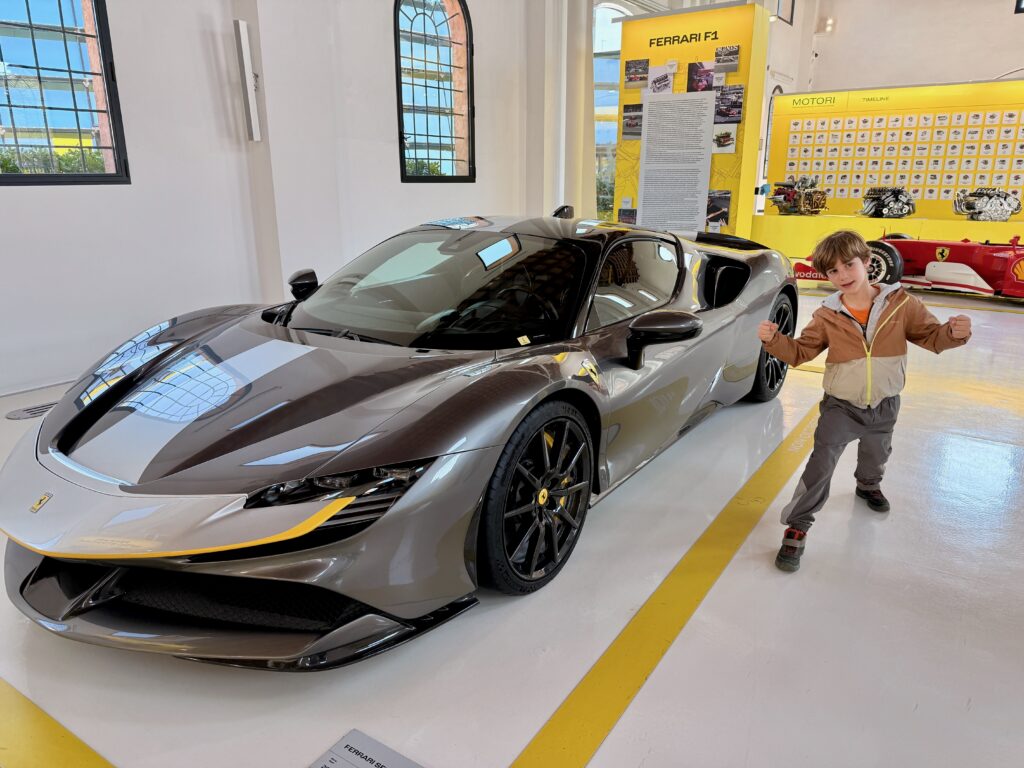
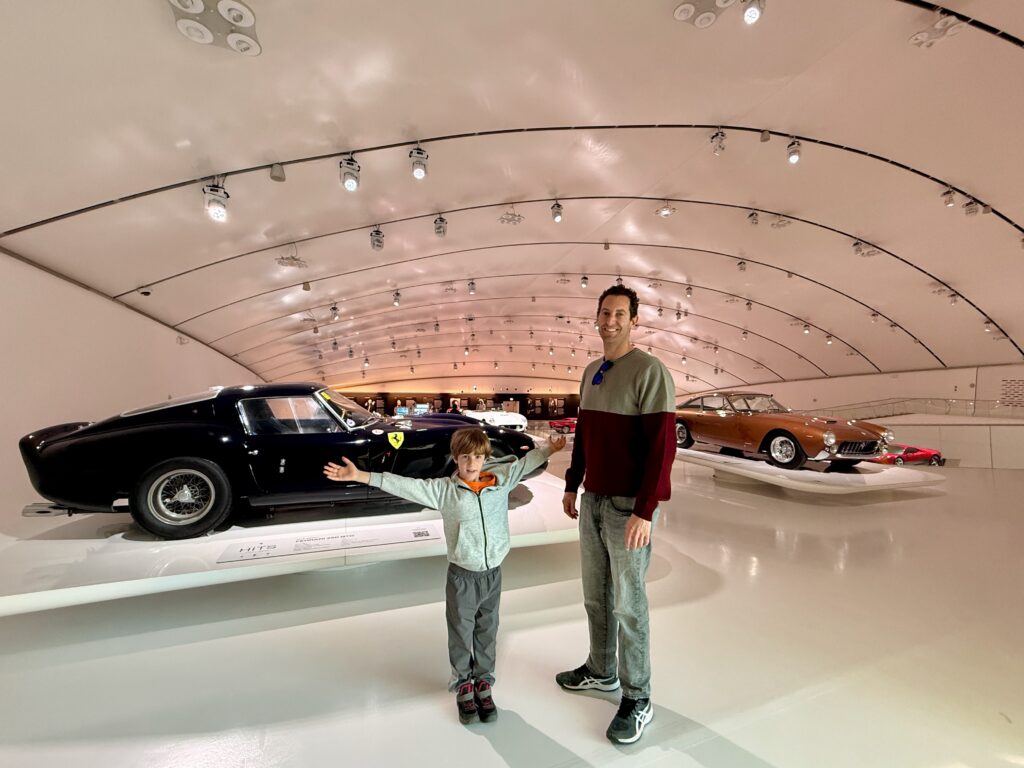
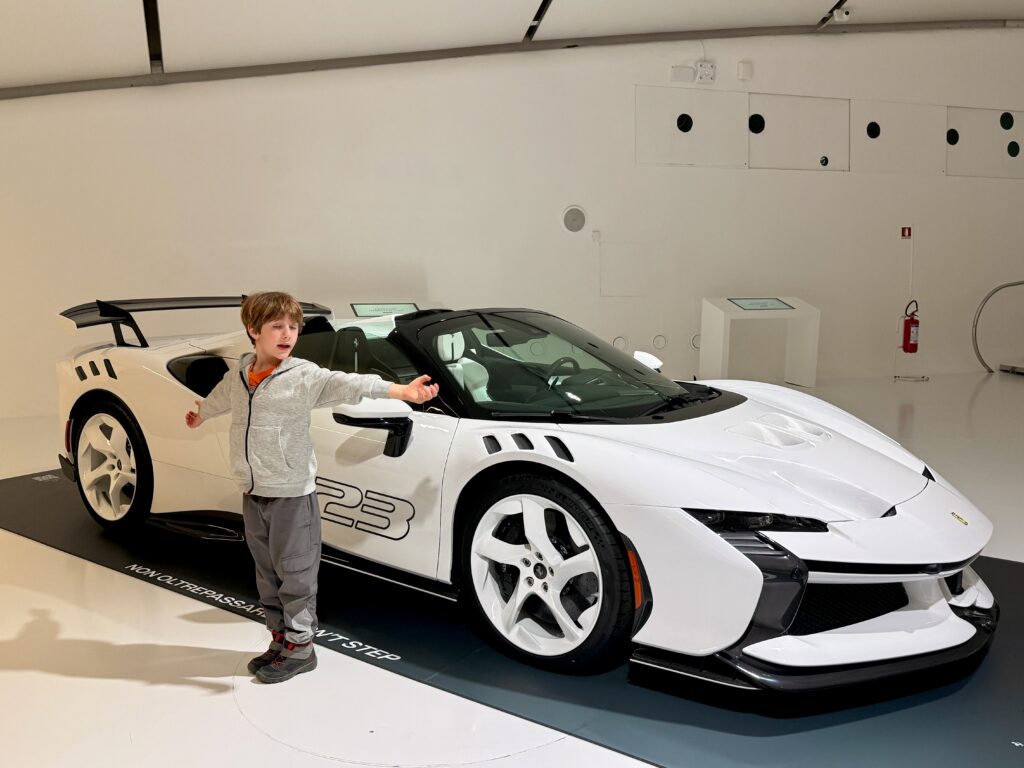
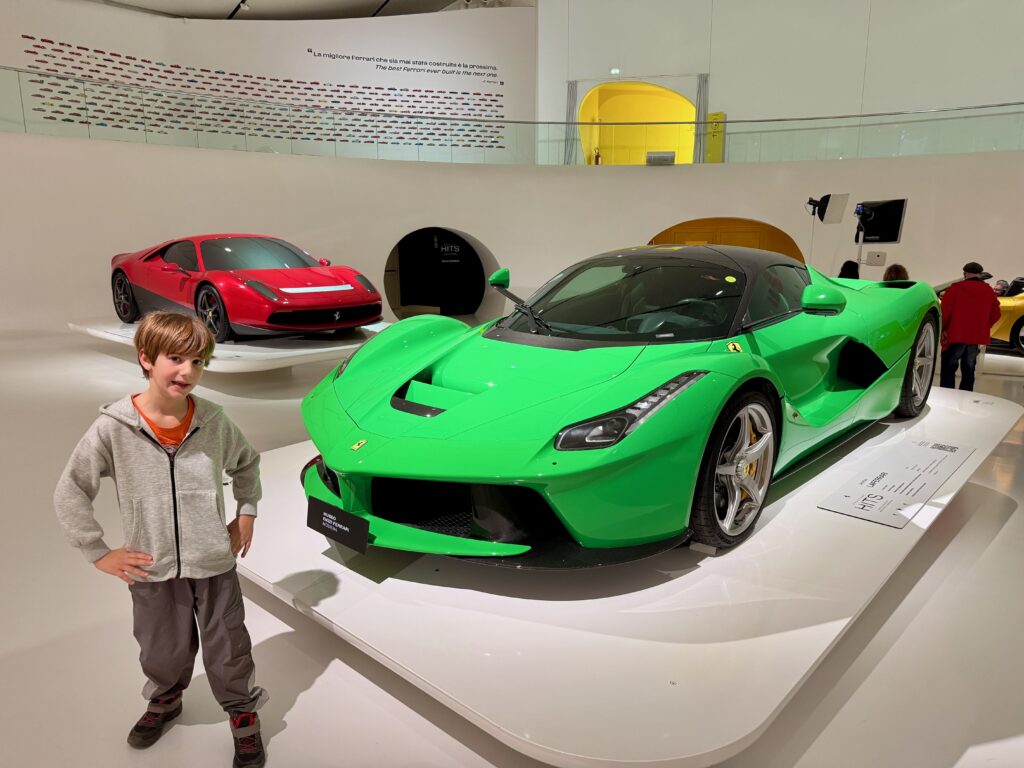
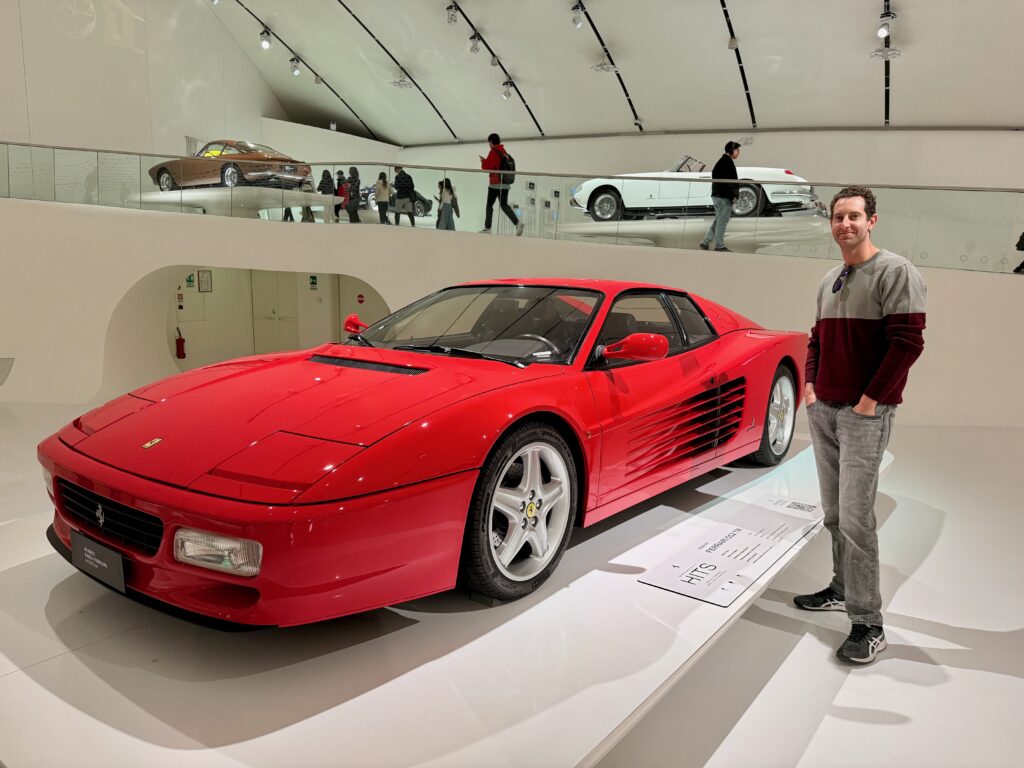
The Museo Ferrari was a highlight of the trip. Two out of three of us are particularly car-obsessed and were in heaven but even I found the Ferrari museum impressively done, and the history of the brand (Enzo Ferrari’s personal story and family history, Formula 1, the design evolution) is genuinely compelling and moving. Our visit coincided with an interactive exhibit linking famous musicians and celebrities with their customized, favorite, or a tangentially related Ferrari, which was interesting. Jacob was completely transfixed and Dave couldn’t resist getting a professional photo taken of the two of them sitting in a very special yellow Ferrari. The cars themselves are just gorgeous to observe up close. If you have kids who are even remotely interested in cars or speed or racing, this is an easy win. And if they’re not particularly into cars, it’s still a well-curated and entertaining museum.
Balsamic Vinegar Tasting at Mercato Storico Albinelli
Modena is the home of traditional balsamic vinegar, and not the kind you pour on salad. The real stuff, made in small batches and aged for years (sometimes decades) in progressively smaller wooden barrels until it becomes thick, syrupy, and almost sweet. We did a casual tasting at one of the market stands at the Mercato Storico Albinelli (of young, medium, and aged varieties) and it was one of those food experiences that changes your reference point. The aged balsamic is just in a completely different category from anything you’d use in cooking at home. I bought two bottles to take home and was excited to incorporate into my cooking repertoire.
Piazza Grande & the Duomo
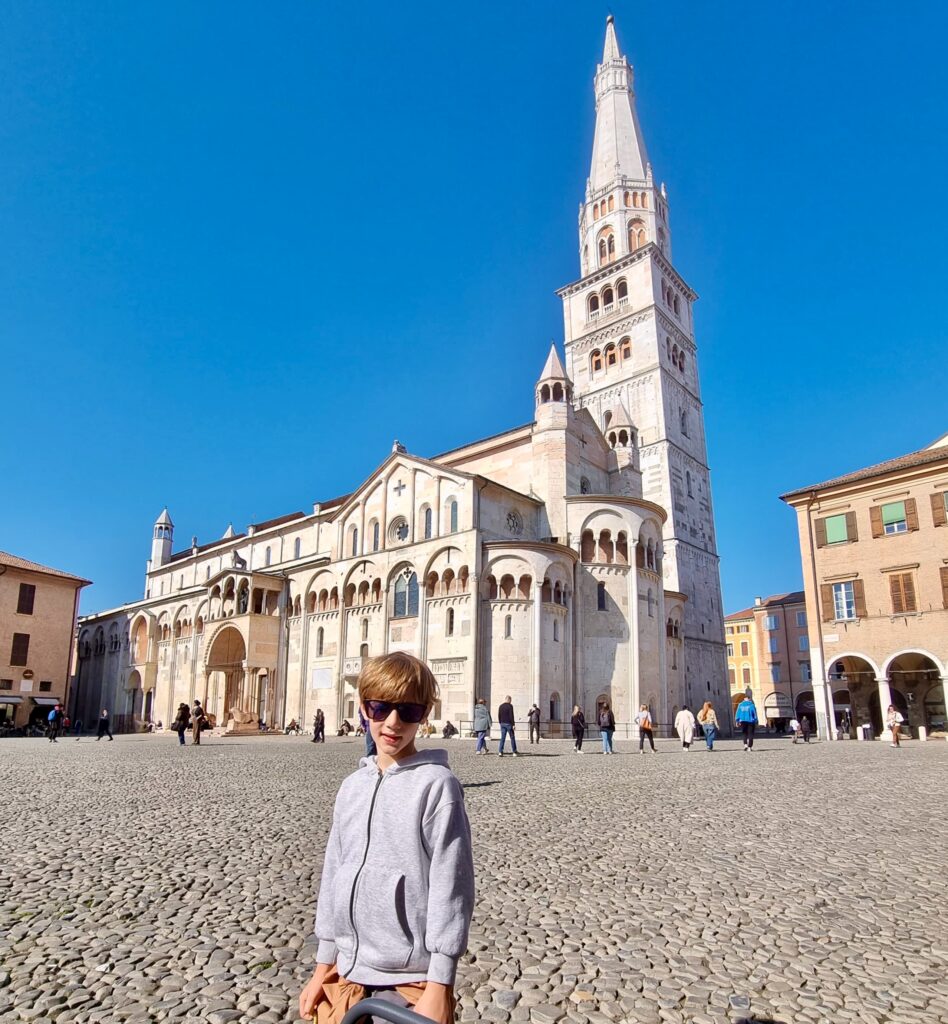
After the Ferrari rush and the balsamic tasting, we made our way to Modena’s Piazza Grande and the Duomo, a beautiful Romanesque cathedral. The piazza has a completely different energy from Bologna’s; it’s quieter, more self-contained, really lovely to sit in for a bit with some gelato, pastry, and of course, an espresso. The best way to end a daytrip.
Would We Go Back?
Absolutely. Bologna exceeded our expectations across the board as a walkable, accessible city for families, as a food destination (genuinely one of the best we’ve been to), and just as a really pleasant, livable place to spend a few days. It doesn’t feel overrun with tourists in the way some Italian cities do, and the locals have a matter-of-fact pride in their food culture that you can feel in every meal.
For the Modena day trip: definitely go, and if Ferraris are a draw, plan for a full day between Maranello and the city for both museums. If not, half a day in Modena itself (market, balsamic tasting, Piazza Grande) is plenty.